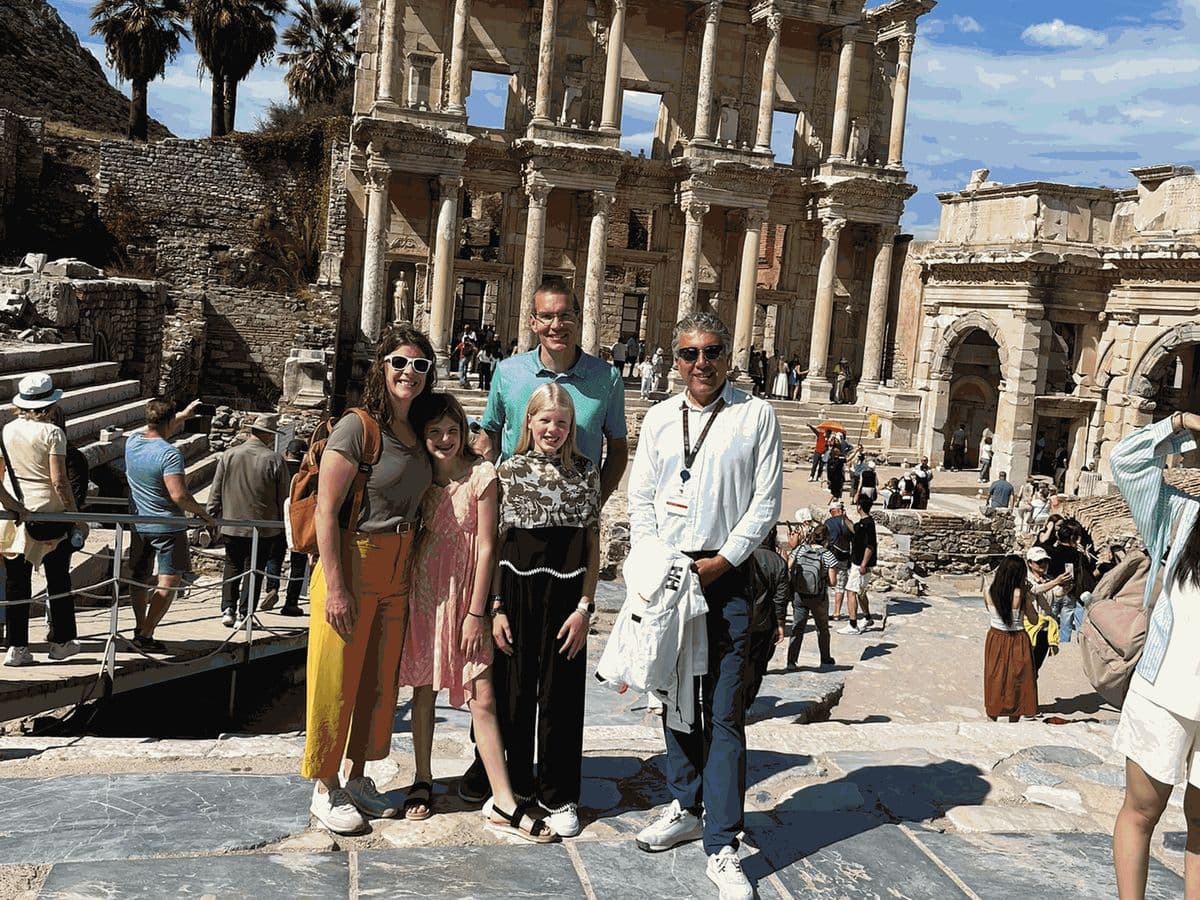
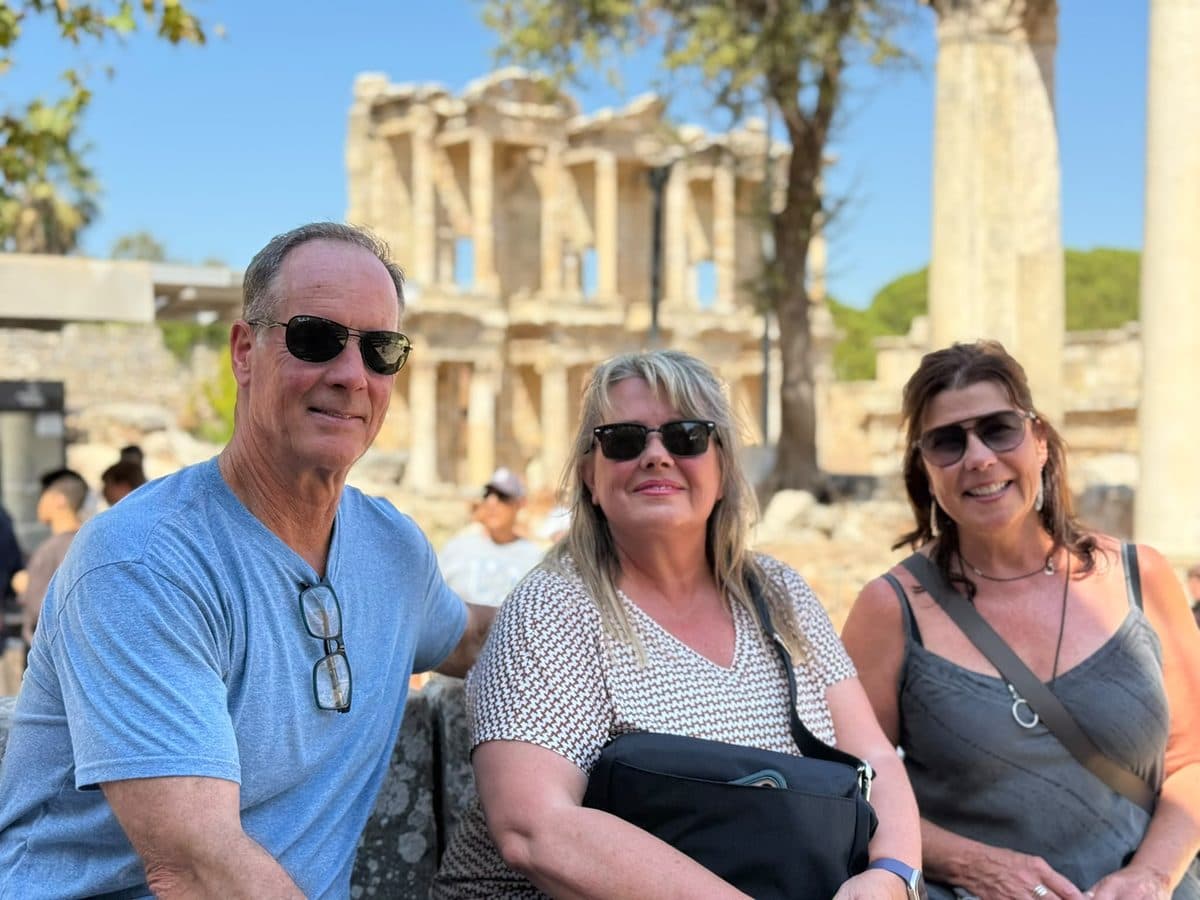
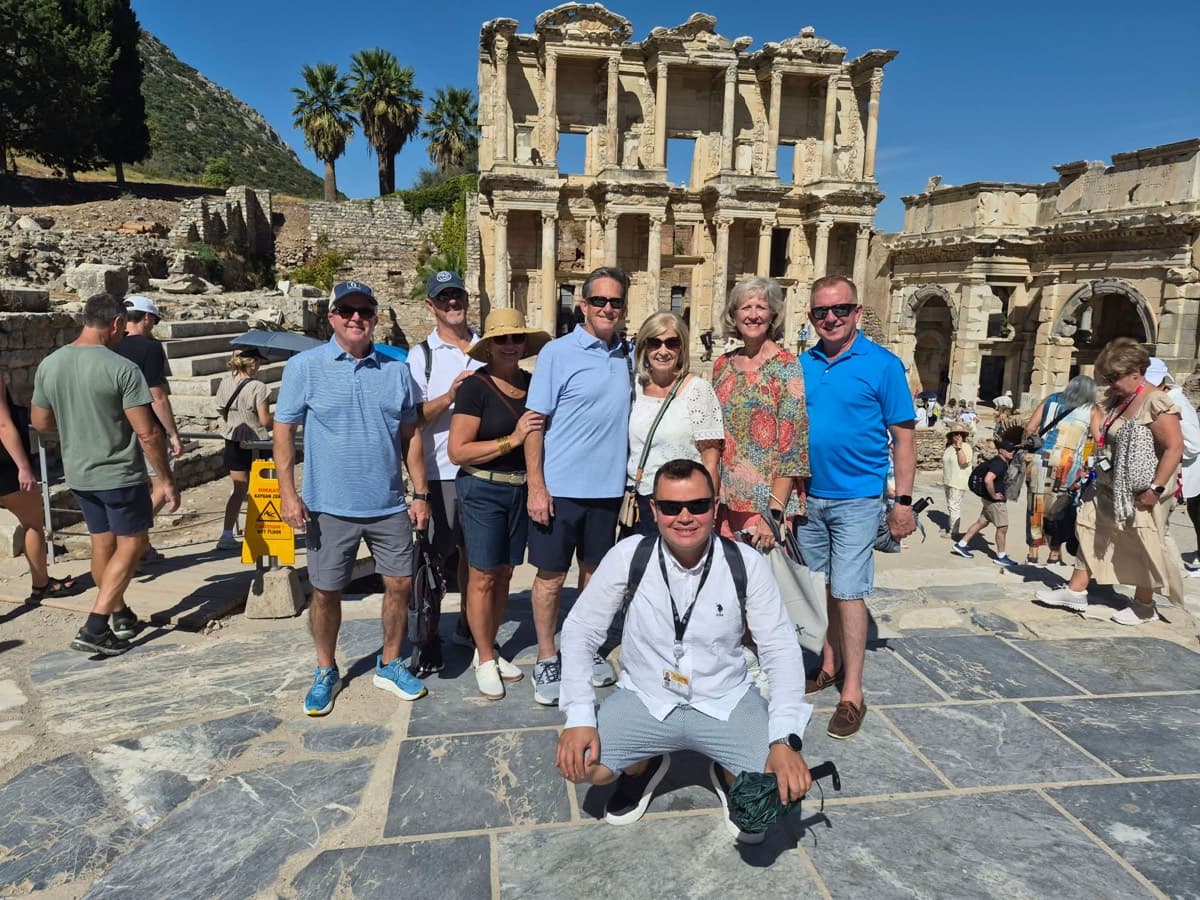
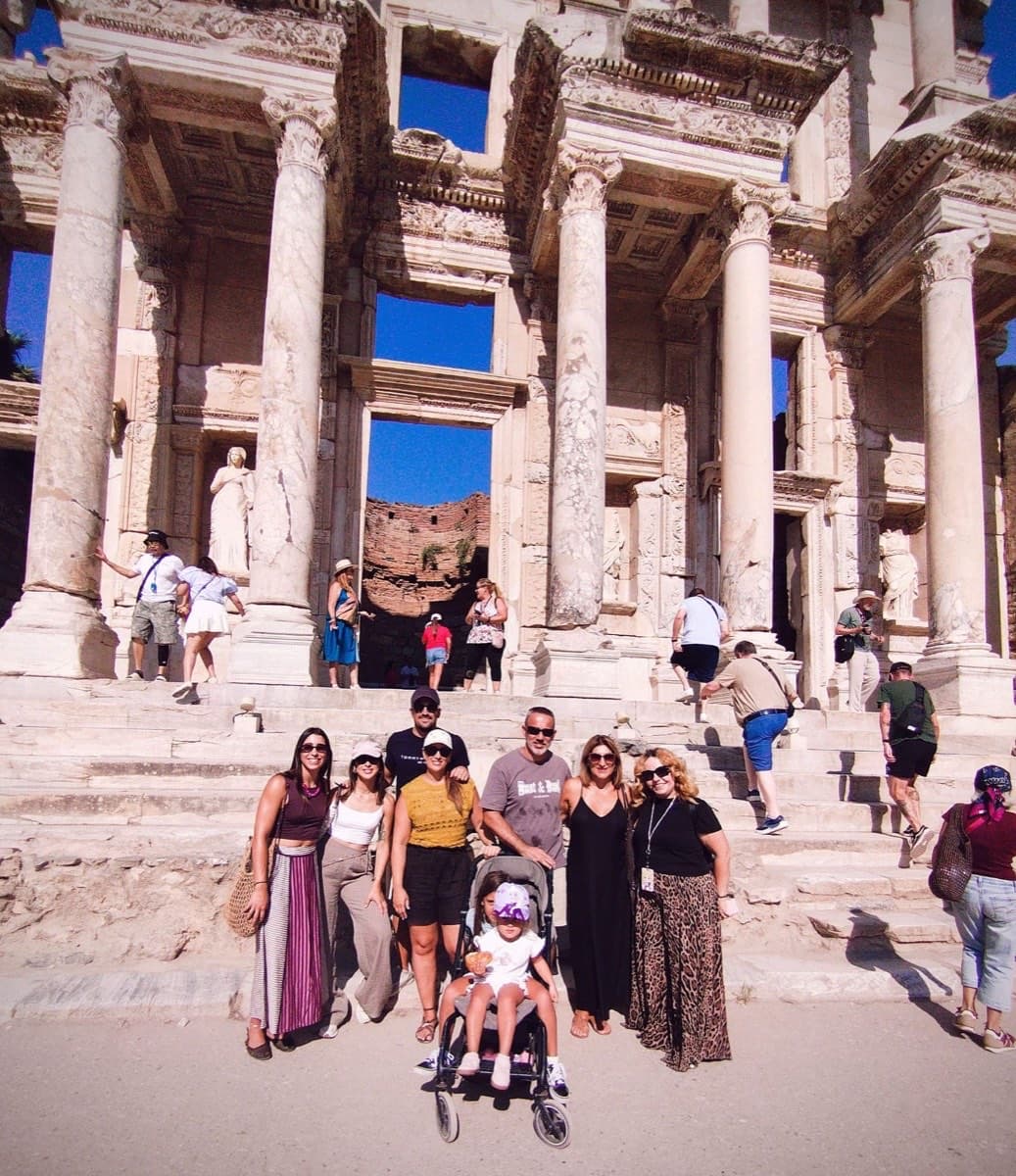
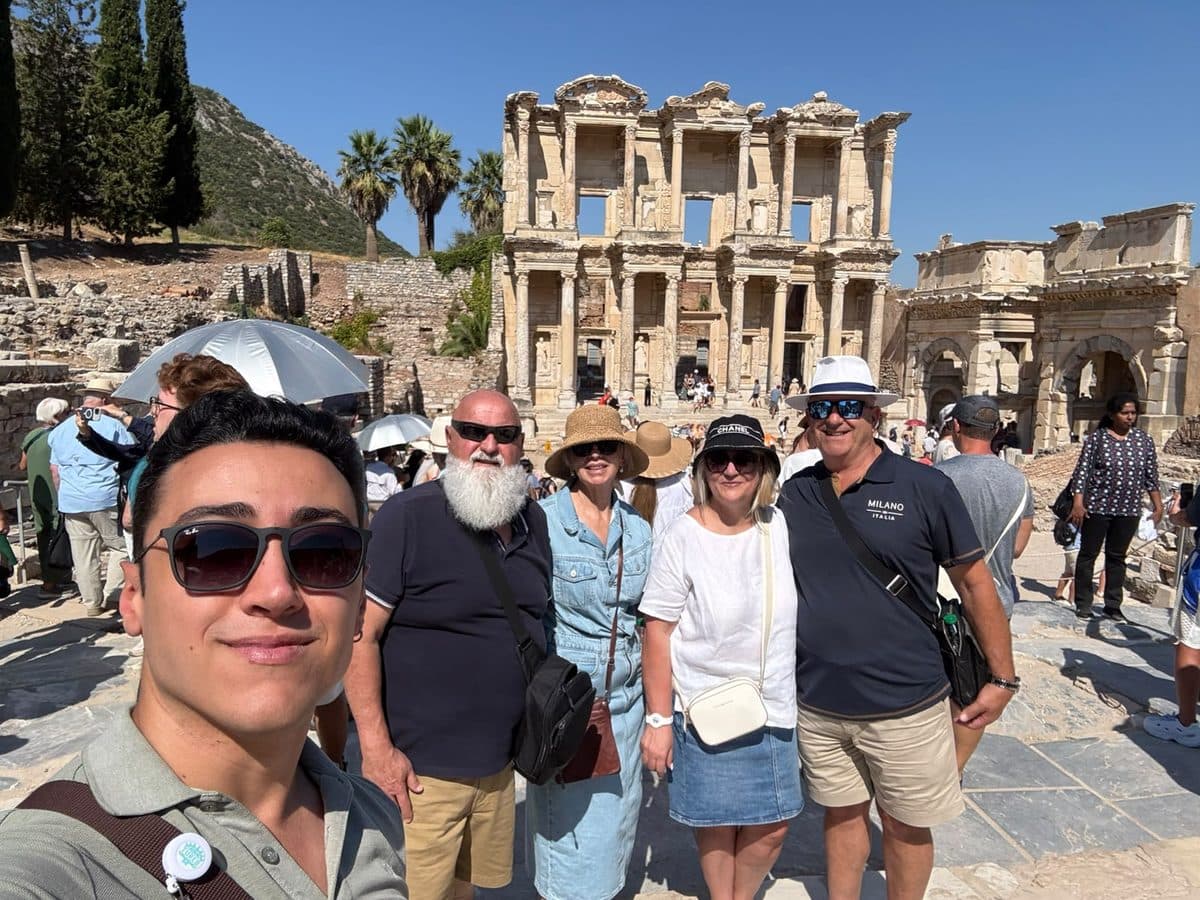
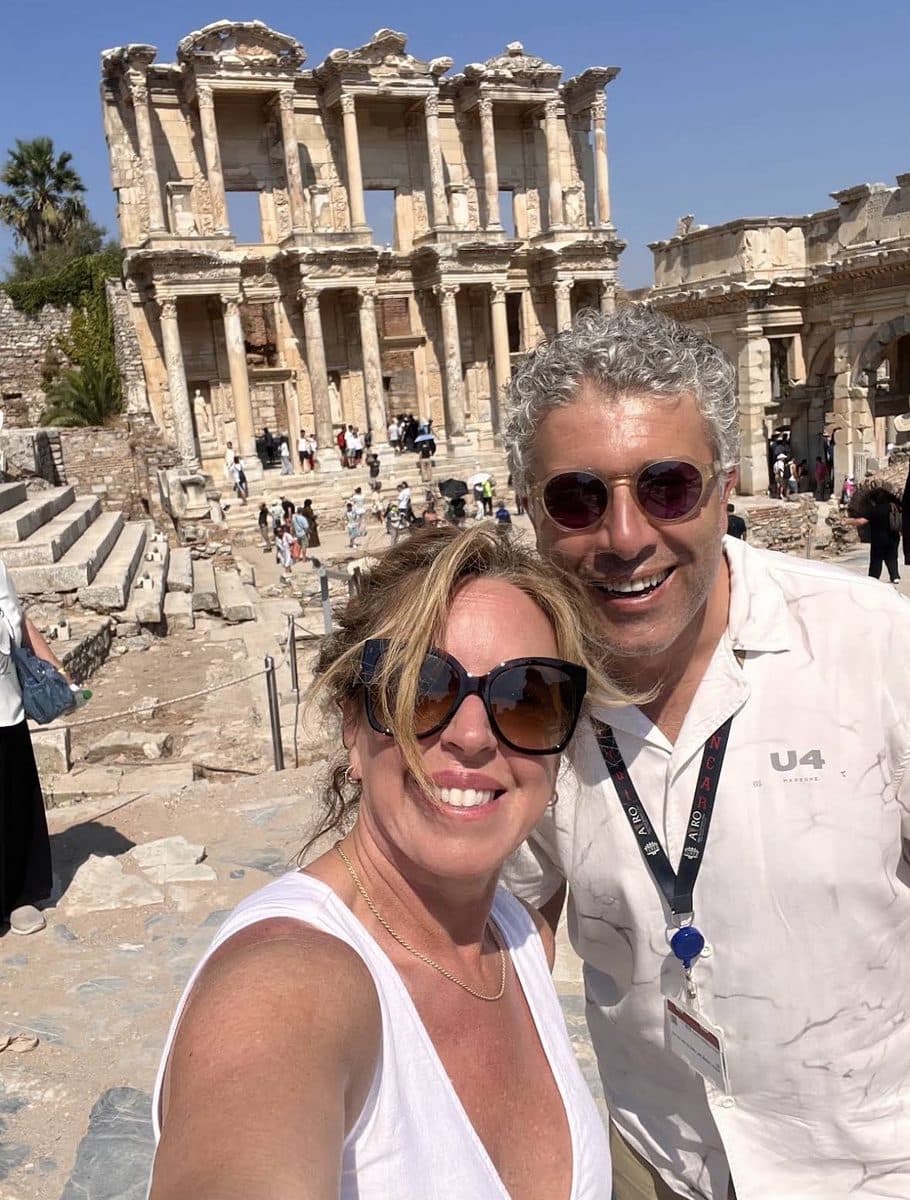
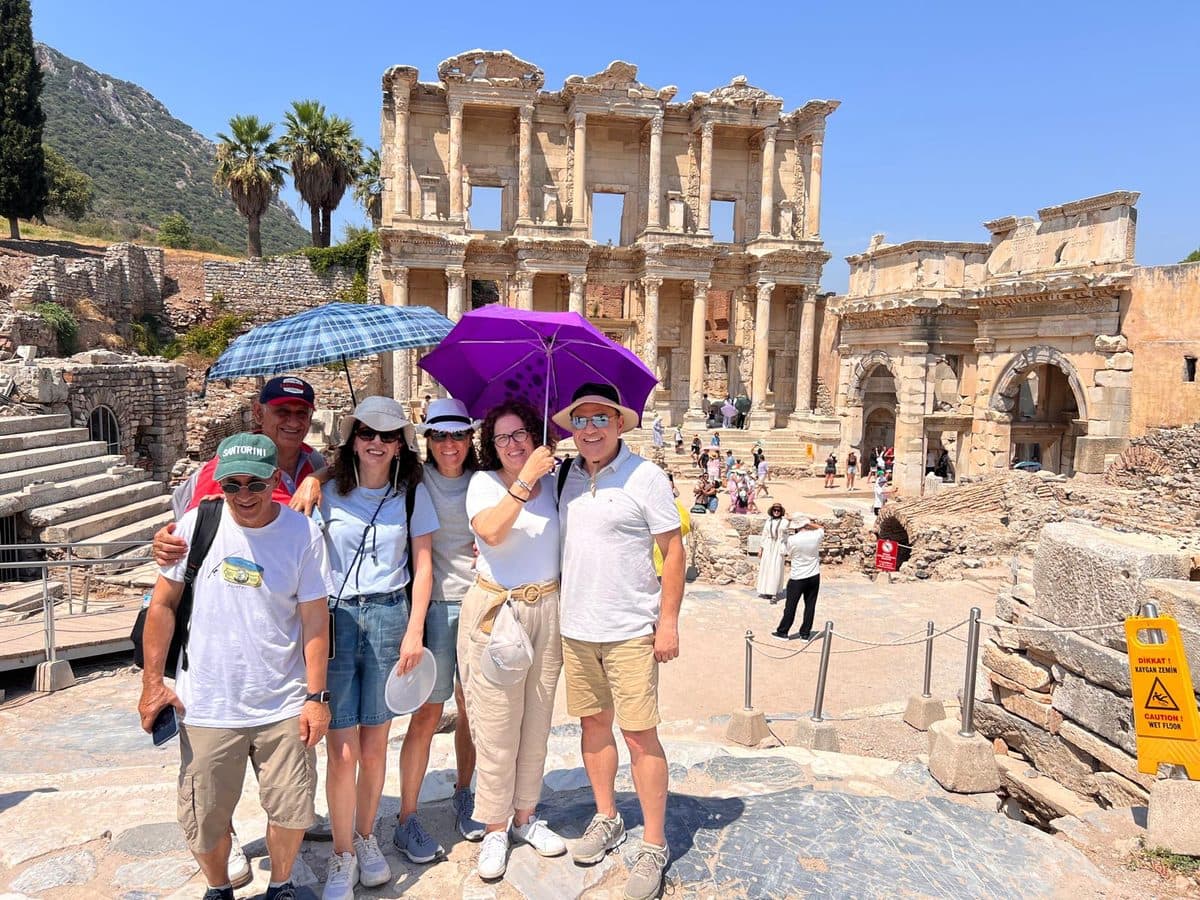
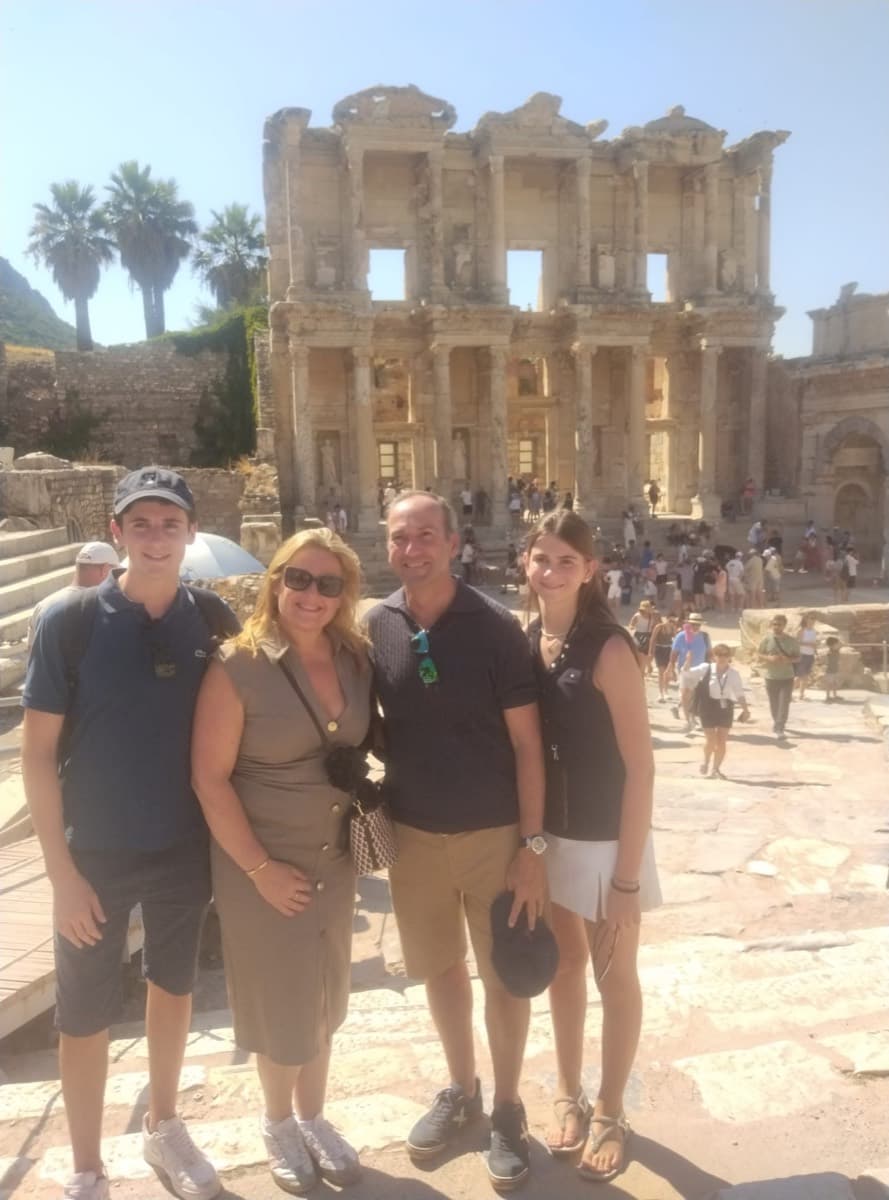
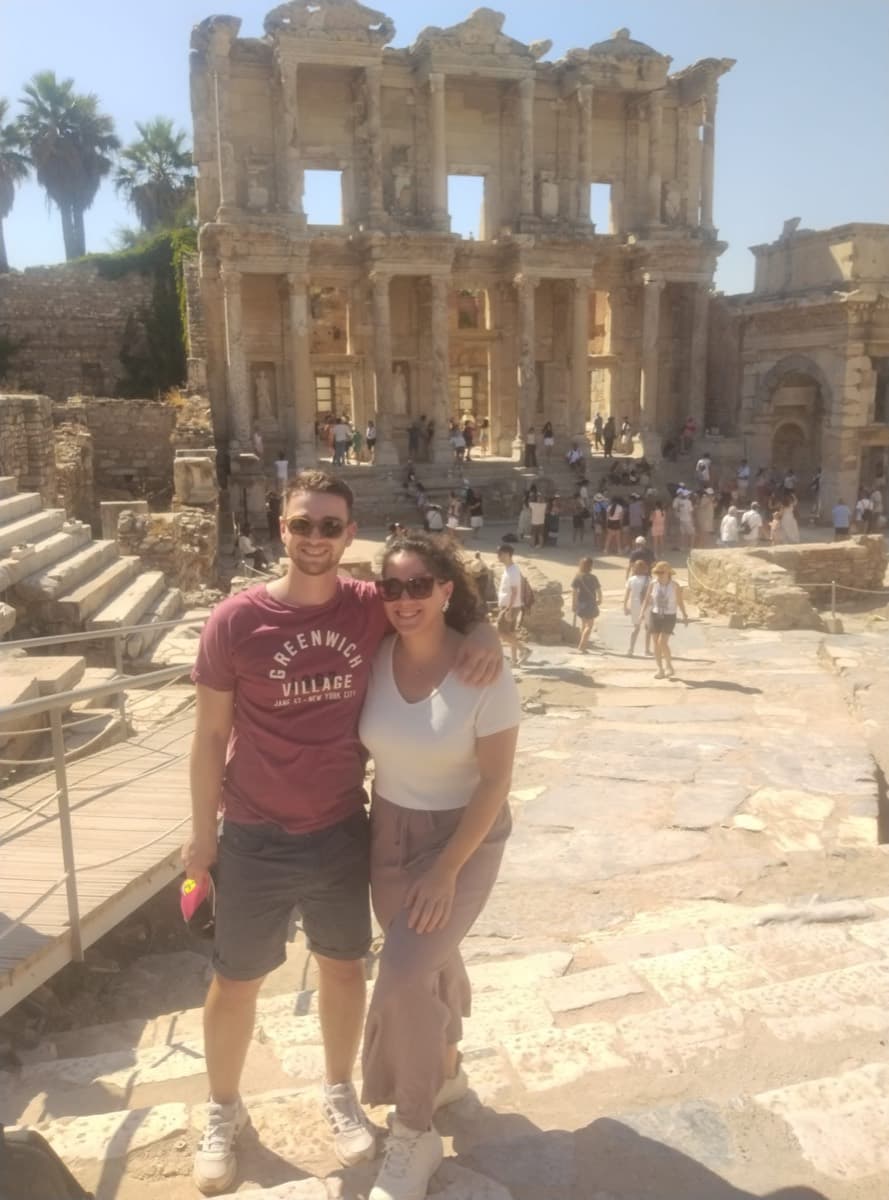
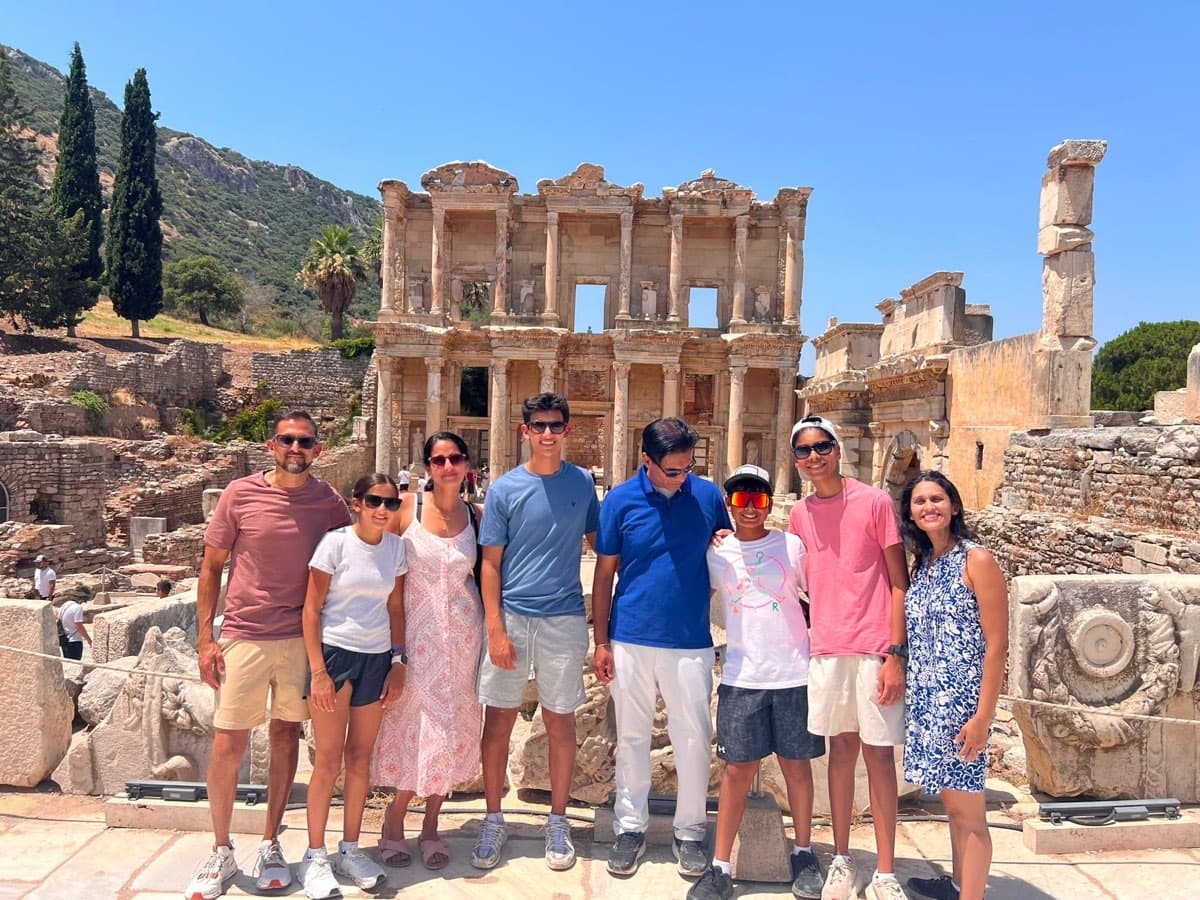
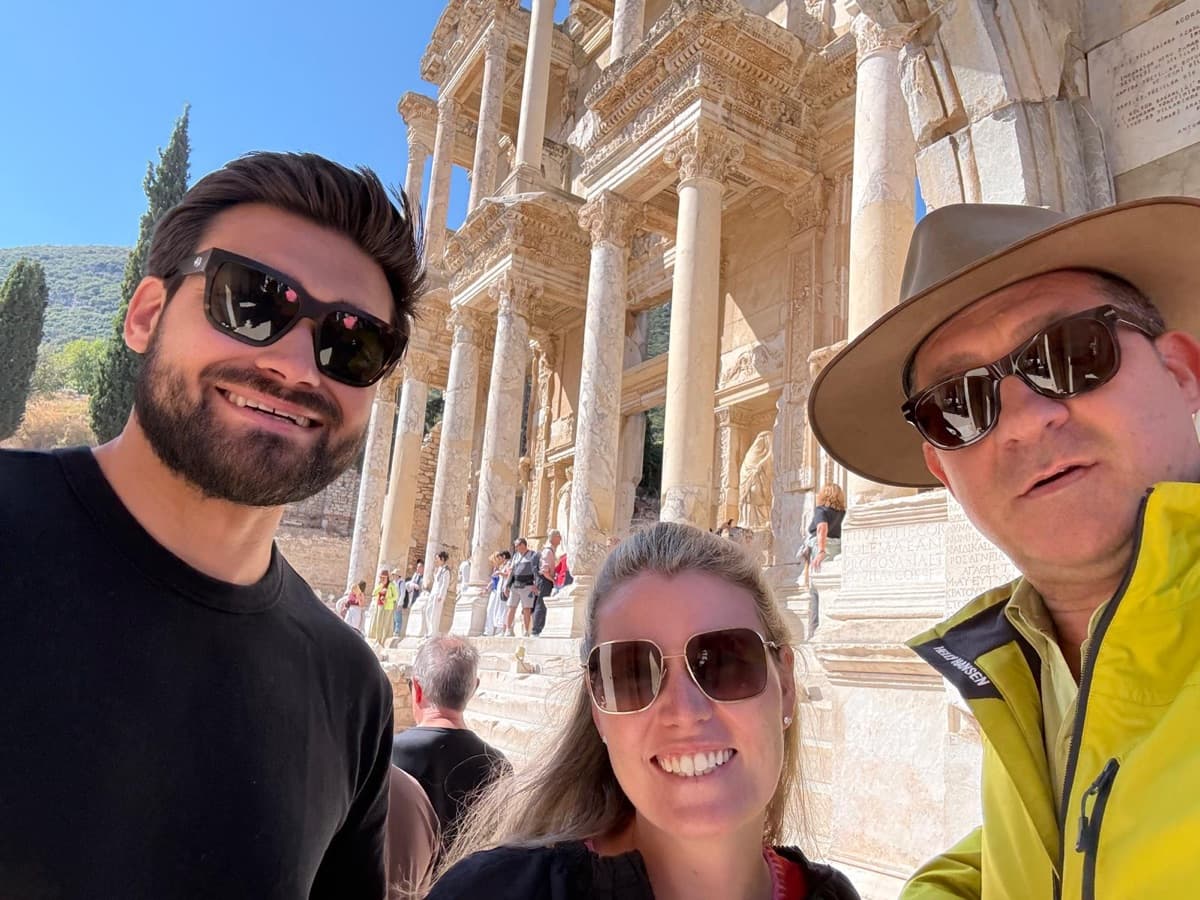
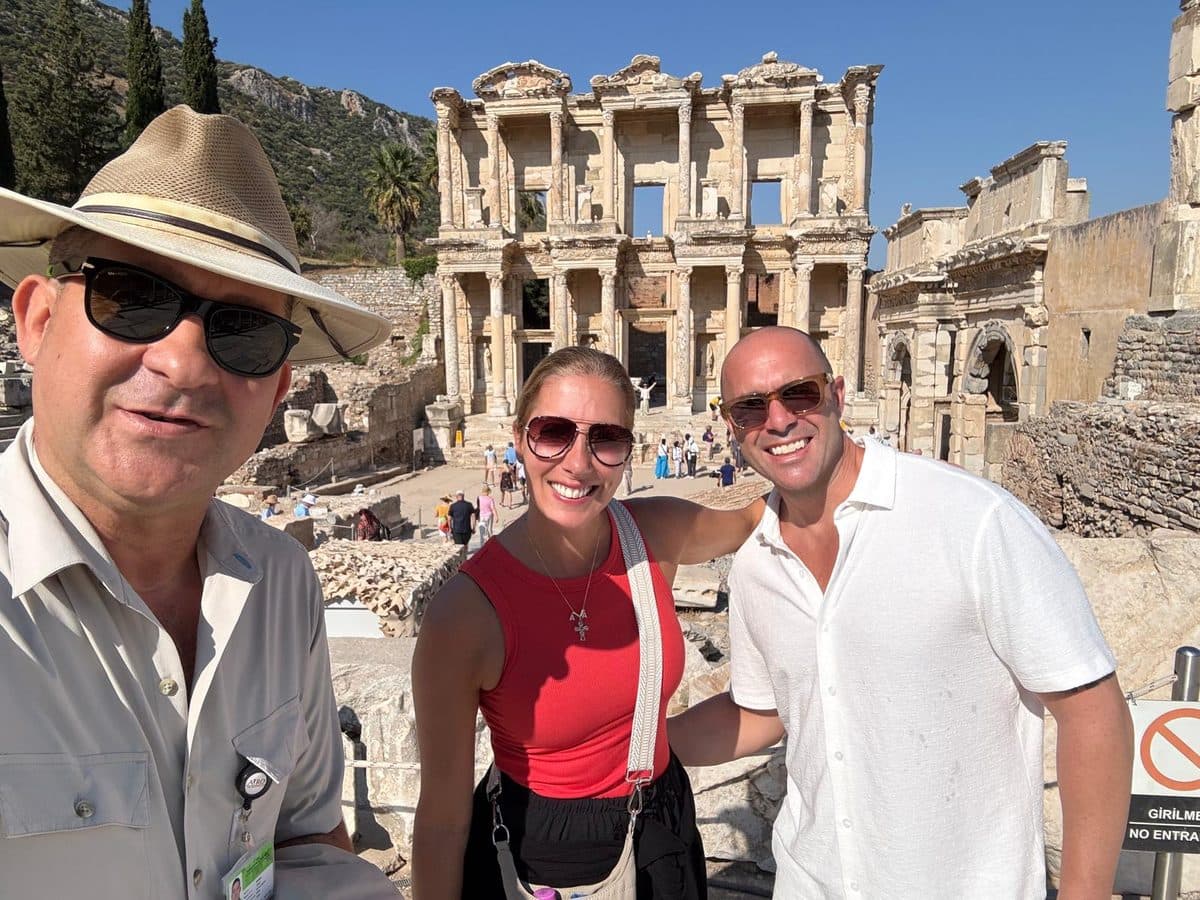
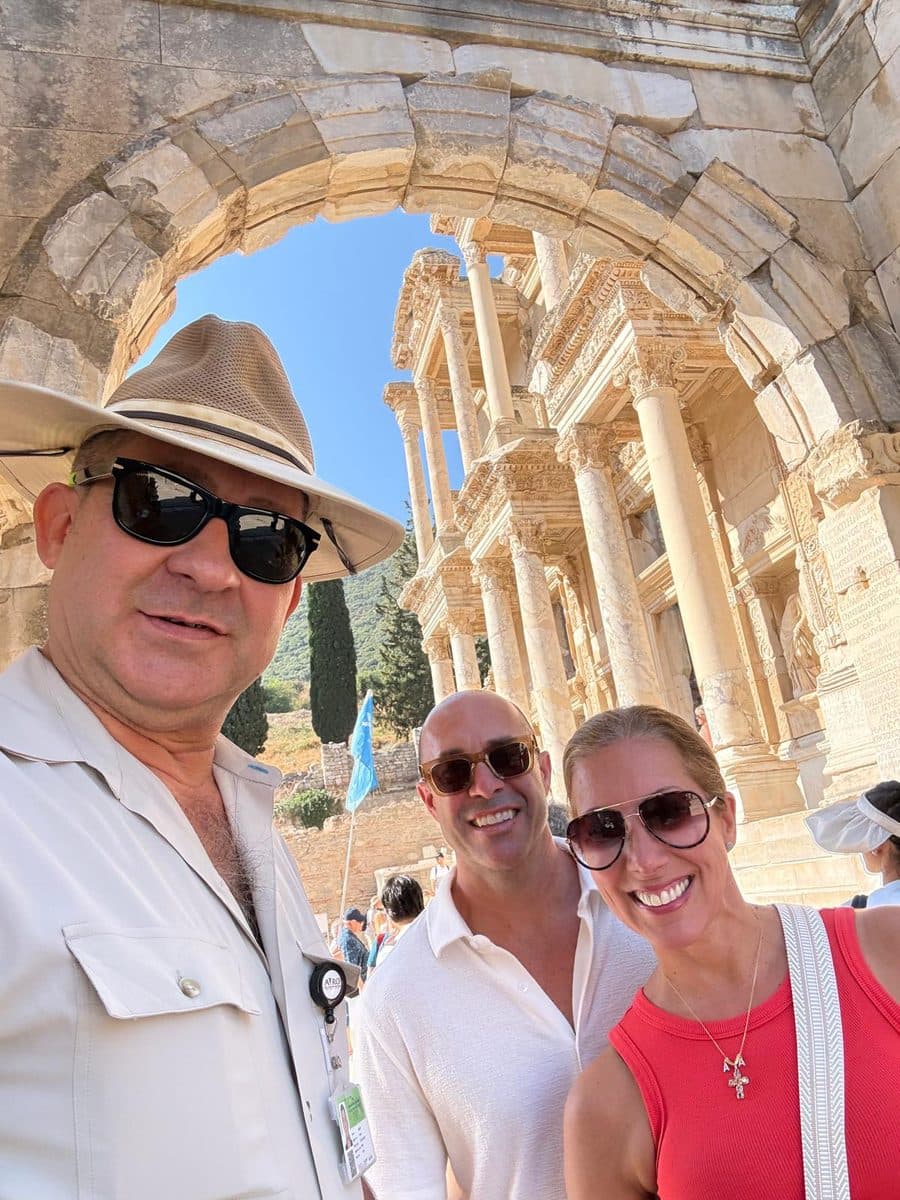
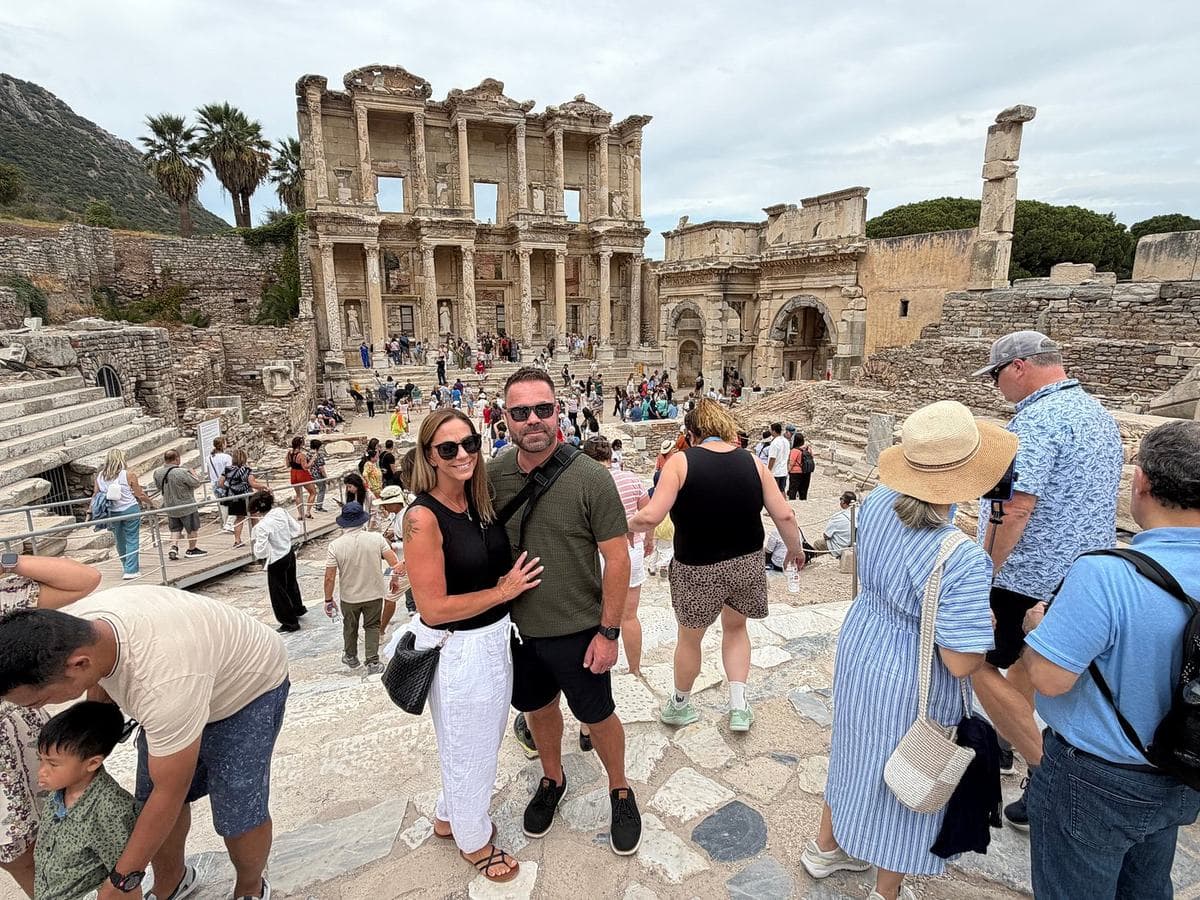
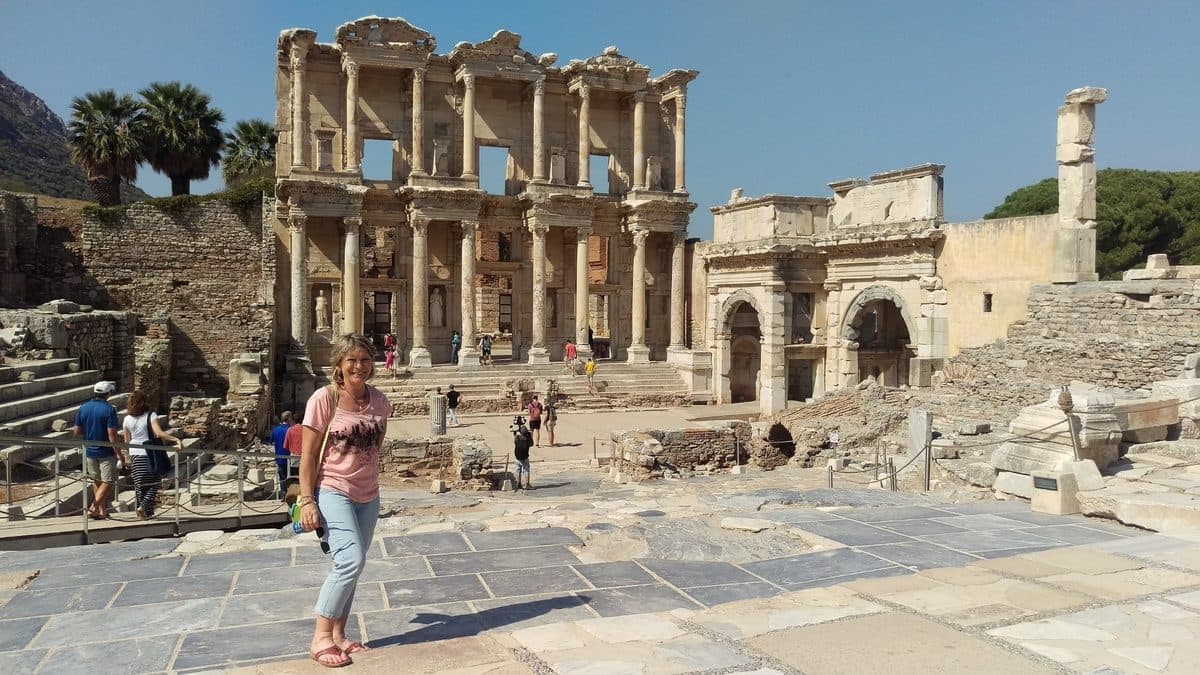
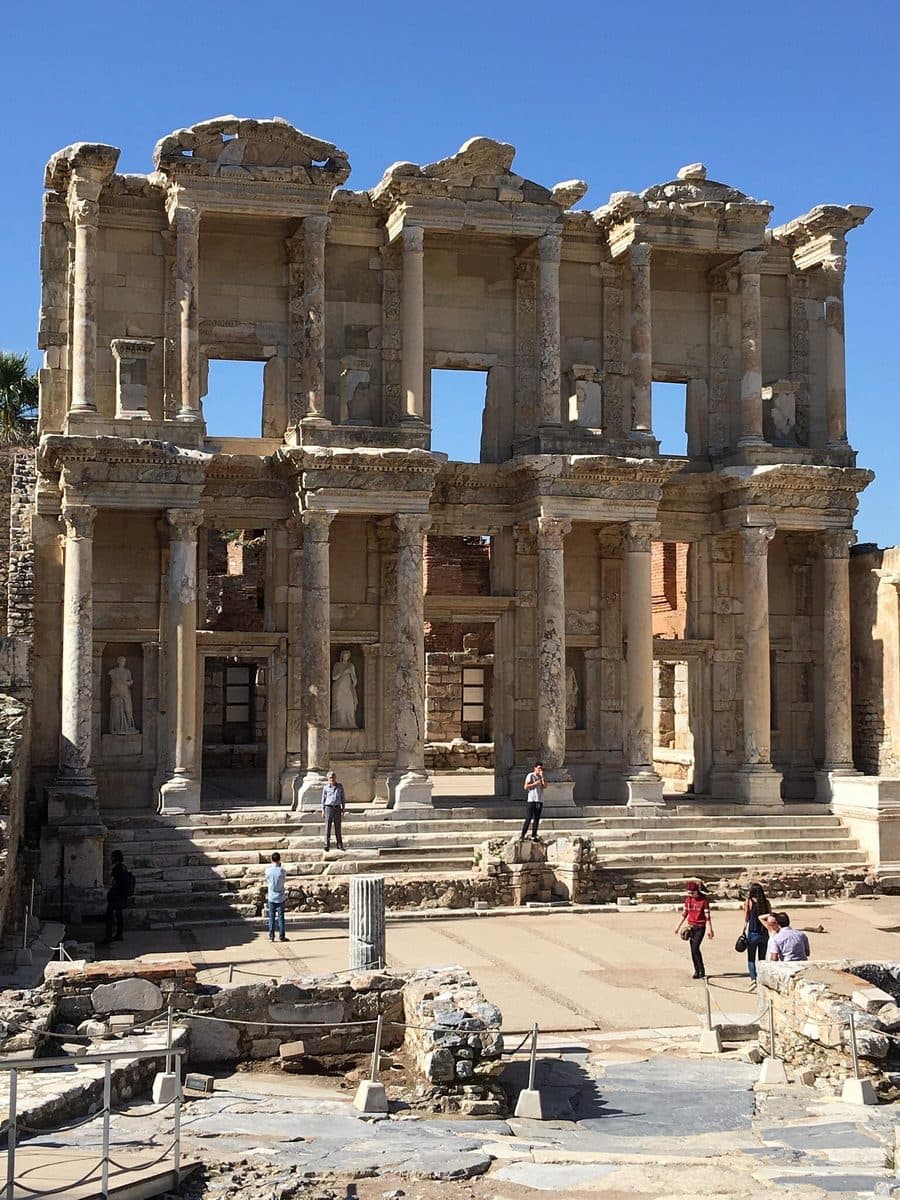
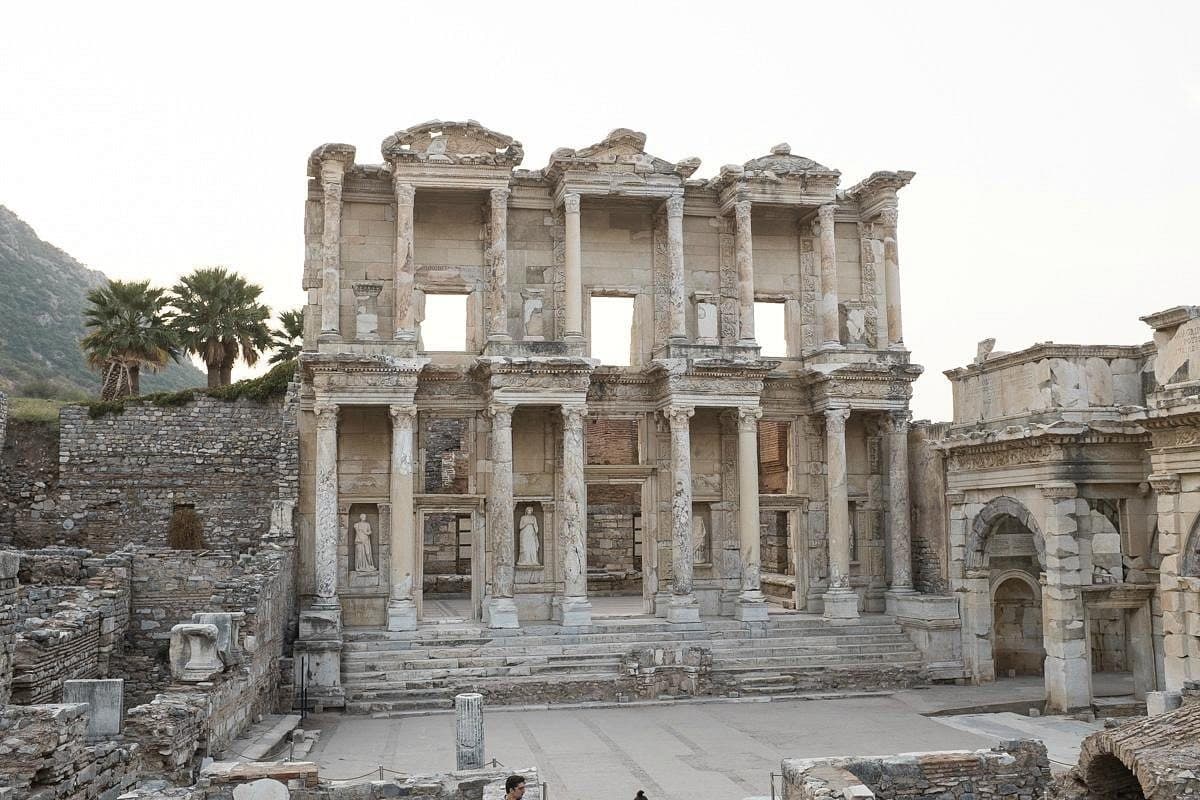
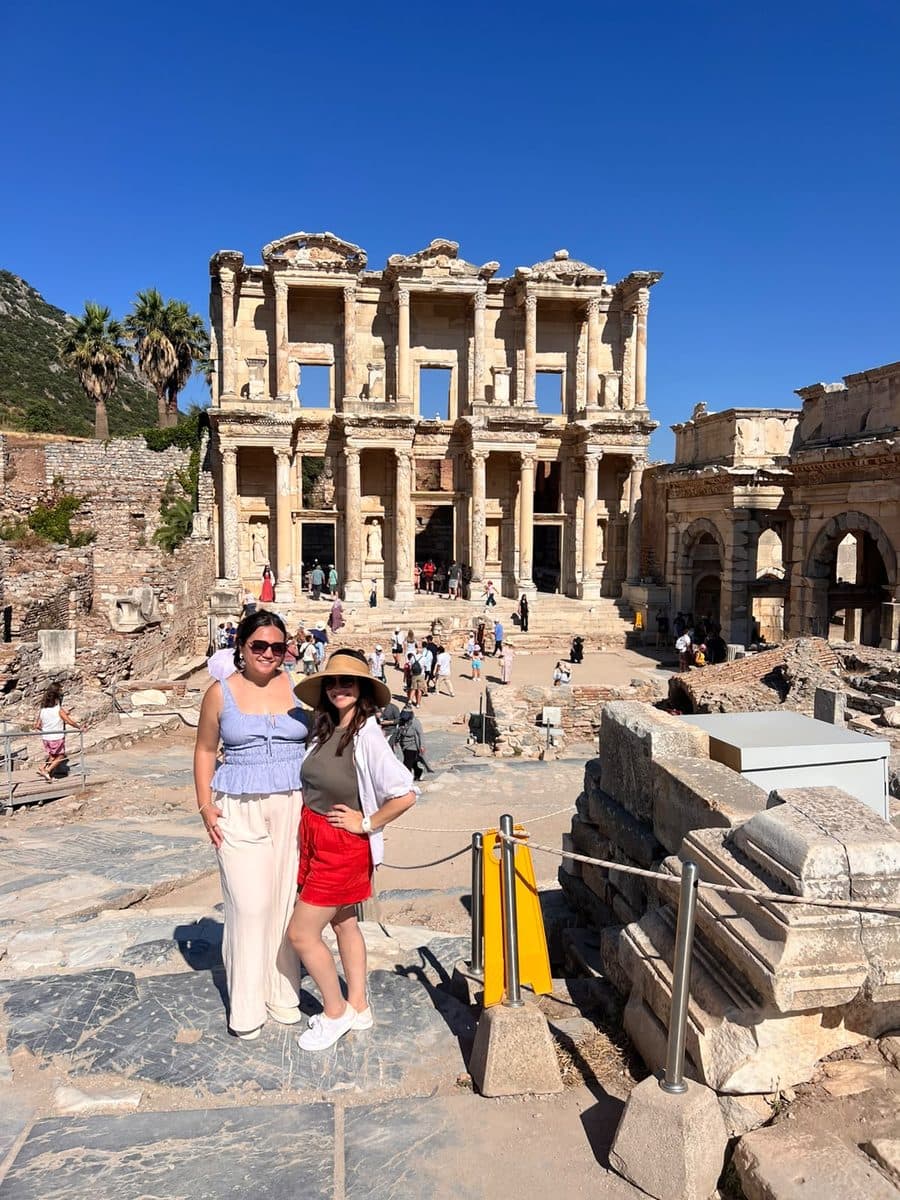
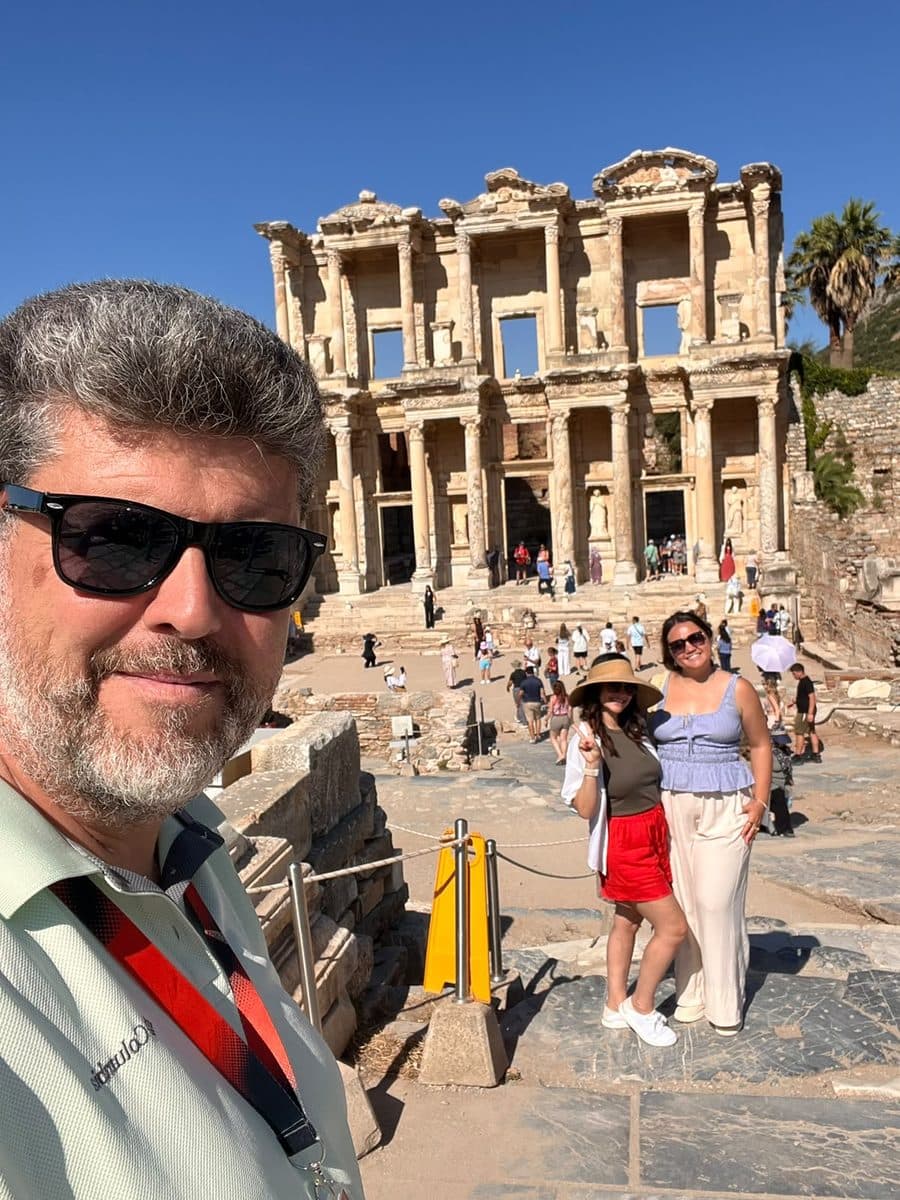
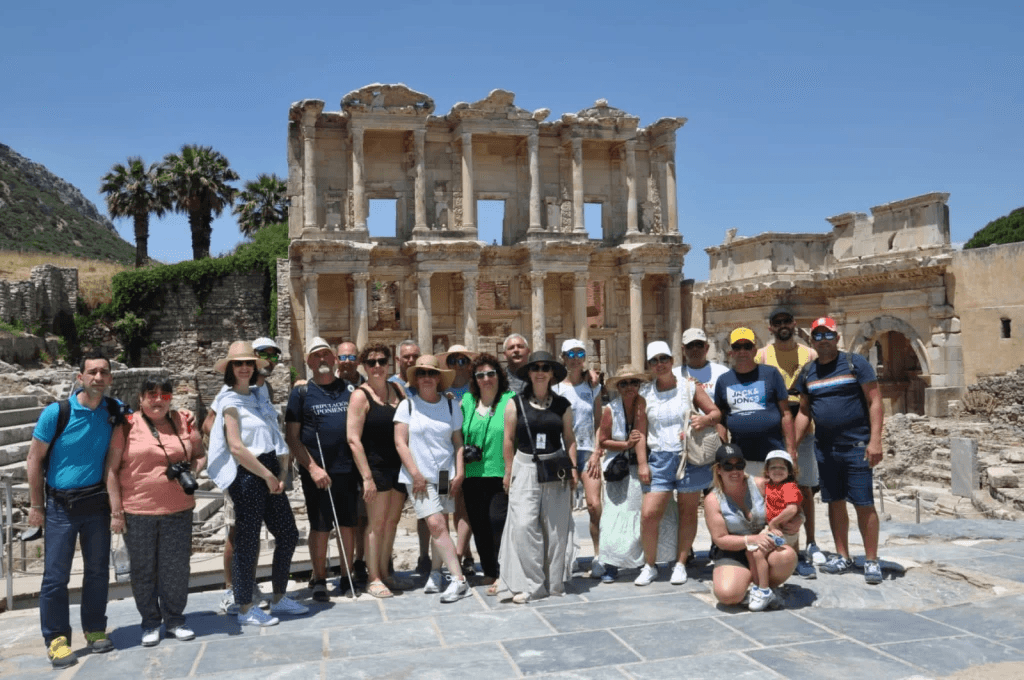
The Library of Celsus is the building people picture when they picture Ephesus. It stands at the foot of Curetes Street, where the marble paving opens into a square, a two-storey facade of columns, pediments and statue niches rising against the hillside. It was never the largest library in the ancient world, but it was built to be looked at, and two thousand years later that is still exactly what it does.
A library that is also a tomb
Tiberius Julius Celsus Polemaeanus was a local man who went far. Born in the region, he rose through the Roman army and administration to the Senate and then to the highest provincial post available, proconsul of Asia, the wealthy province that Ephesus was the seat of. When he died in the 110s AD his son, Tiberius Julius Aquila, built this in his memory and left a legacy of 25,000 denarii to keep it stocked with books. Aquila died before it was finished; the library was completed under the emperor Hadrian.
That makes it two things at once. It was a working public library, and it was a mausoleum. Celsus lies in a marble sarcophagus in a vaulted crypt directly beneath the reading hall, reached by a passage under the central niche. Burial inside the walls of a Roman city was a rare honour, normally reserved for the most important citizens, and placing the tomb under a library rather than a temple made a deliberate point about the kind of man he was.
The facade is stagecraft
Look at the front for a minute and the trickery becomes clear. It is wider than the building behind it, a screen designed to impress the square rather than a true reflection of the hall. The columns are not evenly spaced: the central pair is taller and set further apart than the outer ones, and the platform curves gently upward in the middle. The effect is that the facade reads as larger, taller and more perfectly balanced than its actual dimensions, the same optical corrections Greek architects had used on temples centuries earlier, applied here to a Roman library.
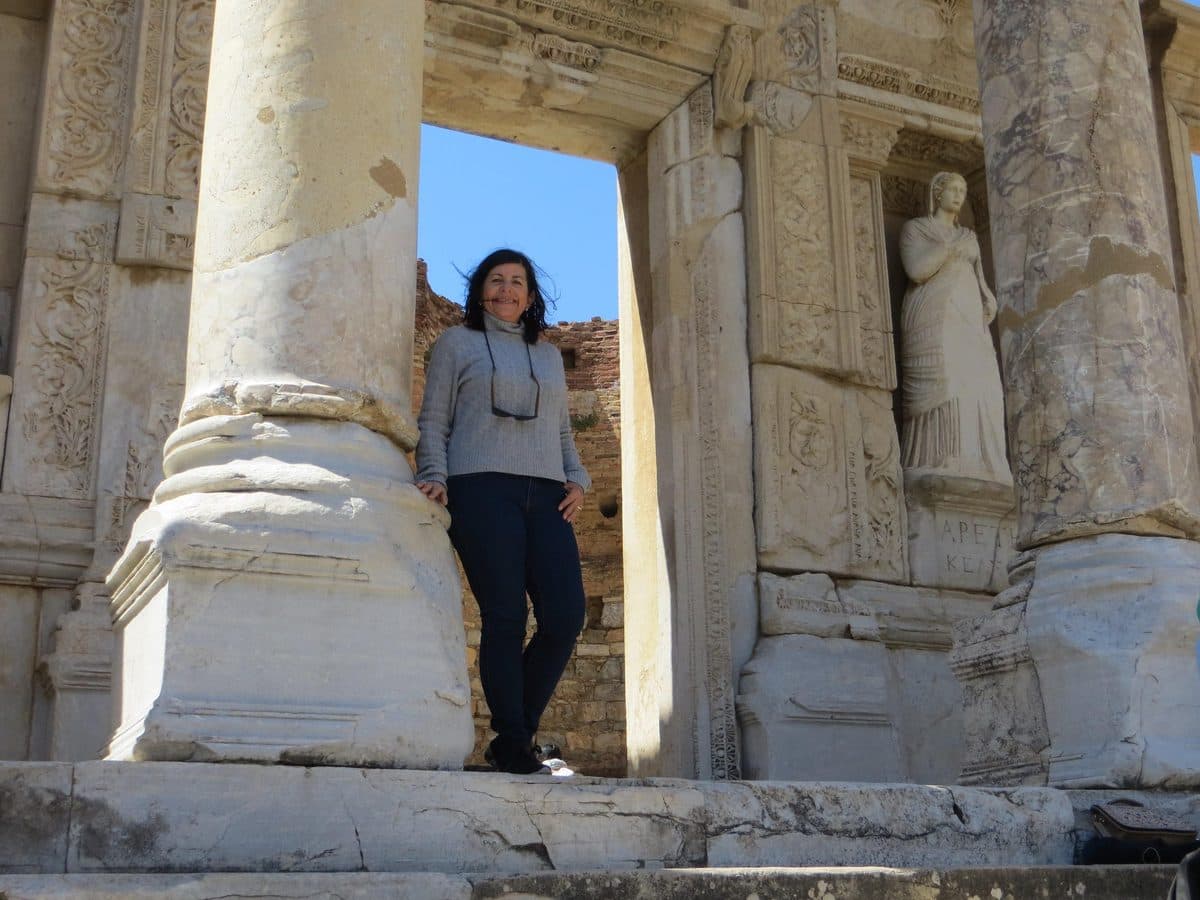
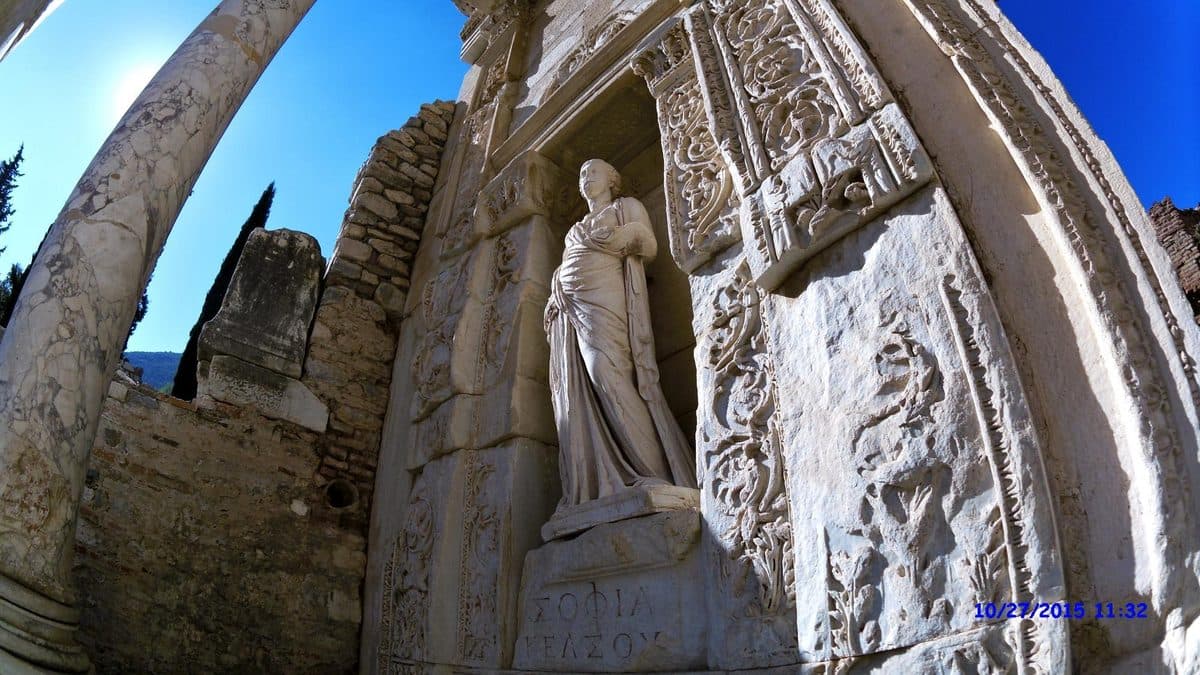
Between the columns of the lower storey stand four female figures. They personify the virtues the inscription attaches to Celsus: Sophia, Episteme, Ennoia and Arete, that is wisdom, knowledge, intelligence and virtue. The ones on the building are casts. The originals were taken to Vienna in the early twentieth century and are in the Ephesus Museum there.
Twelve thousand scrolls, and how they were kept
Inside, the single reading room held around twelve thousand scrolls, which put it third in the Roman world behind only the great libraries of Alexandria and Pergamon. The scrolls sat in niches around the walls of the upper level. Behind those niches the builders left a narrow air gap between a double wall, a piece of practical engineering meant to buffer the papyrus against the damp and the temperature swings that would otherwise have rotted it. It is the sort of detail that separates a real library from a monument dressed up as one.
None of the books survive. The interior burned in 262 AD, in a fire that has been blamed on both a Gothic raid and an earthquake, and the reading hall was never rebuilt. The facade stood on for centuries as a ruin until an earthquake, most likely in the tenth or eleventh century, brought it down as well. Its blocks then lay scattered across the square for the better part of a thousand years.
A genuine facade, put back up
What you photograph today is the original marble, but it did not stand continuously. Austrian archaeologists, who have worked at Ephesus since 1895, uncovered the library and its fallen blocks in 1903 and 1904. Between 1970 and 1978 a team led by the archaeologist Volker Michael Strocka lifted those blocks and set them back in their original positions, a method called anastylosis. Only the facade was rebuilt; the hall behind it is still open ground.
This is the honest version of the story, and it is more interesting than the postcard. The joints where weathered ancient stone meets the neutral fill added during reconstruction are visible once you know to look for them, and a good guide will point them out. You are not looking at a replica, and you are not looking at something that survived untouched. You are looking at a real ancient facade that fell and was carefully put back up, which is a rarer and better thing.
Seeing it on a port day
The library sits about two-thirds of the way down the standard walk through Ephesus Ancient City, from the Upper Gate to the Lower, so it arrives as the natural high point of the route and doubles as the place most people pause. Fifteen to twenty minutes at the facade is enough to take it in properly, though few manage to leave that quickly.
Two things reward an early start. The square in front fills fast once the day's ships are ashore, so timing is the difference between a clean photograph and a picture of the crowd. And the facade faces roughly east, taking the morning sun full on and slipping into its own shade by early afternoon. Both point the same way, and they are why our tours leave the Kuşadası cruise port at the first opportunity. The full site is a UNESCO World Heritage property, and the statues and other finds are held at the Ephesus Museum in Selçuk.
Written by the Tours of Ephesus operations team, who walk guests to this facade several times a week in season. No content lifted from third-party sources.