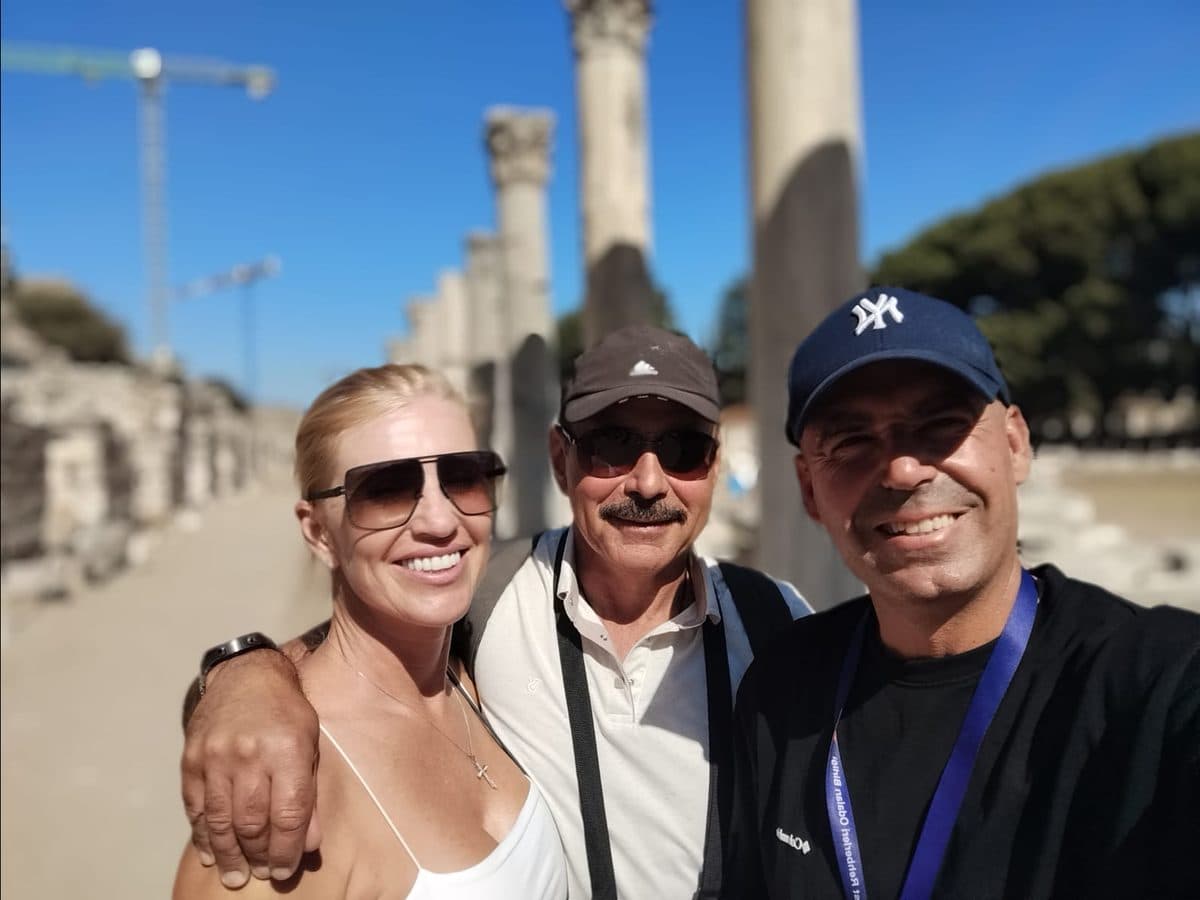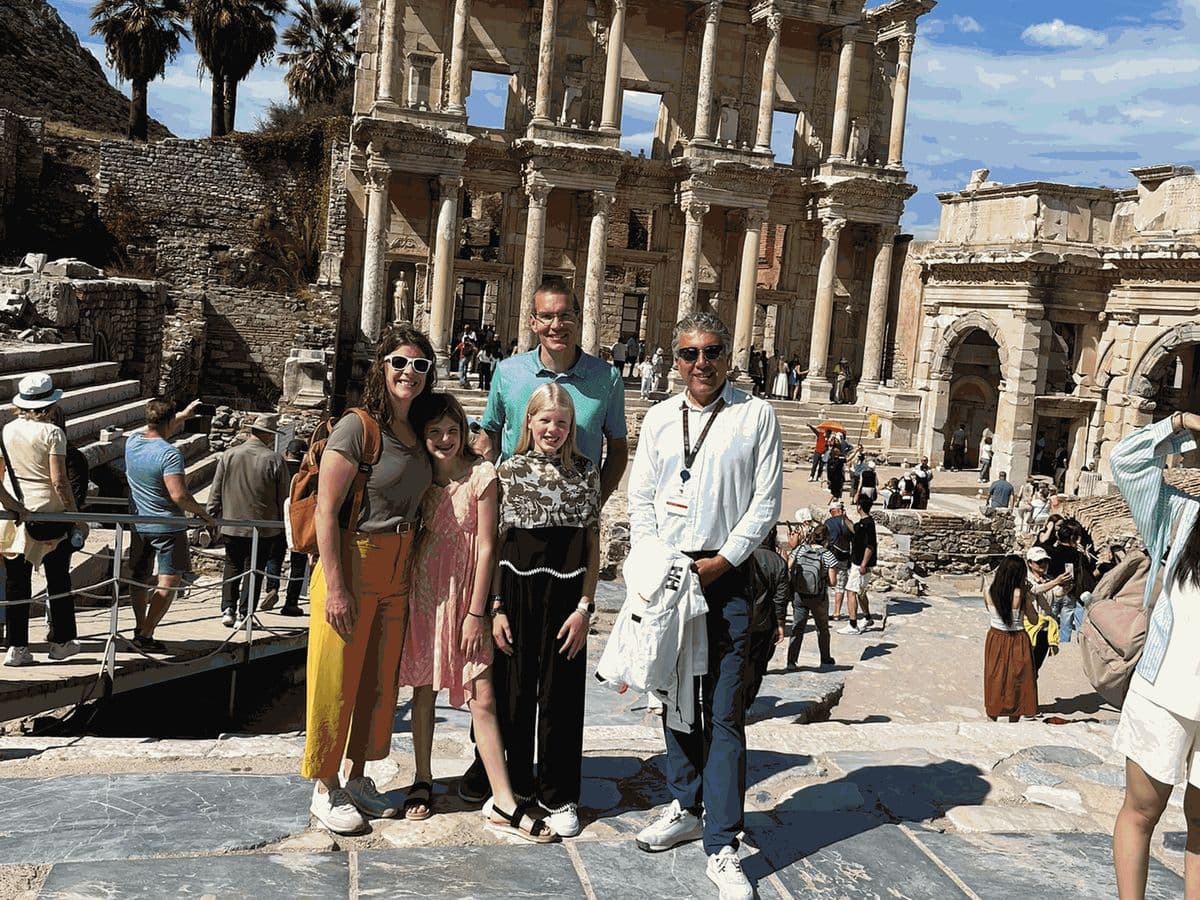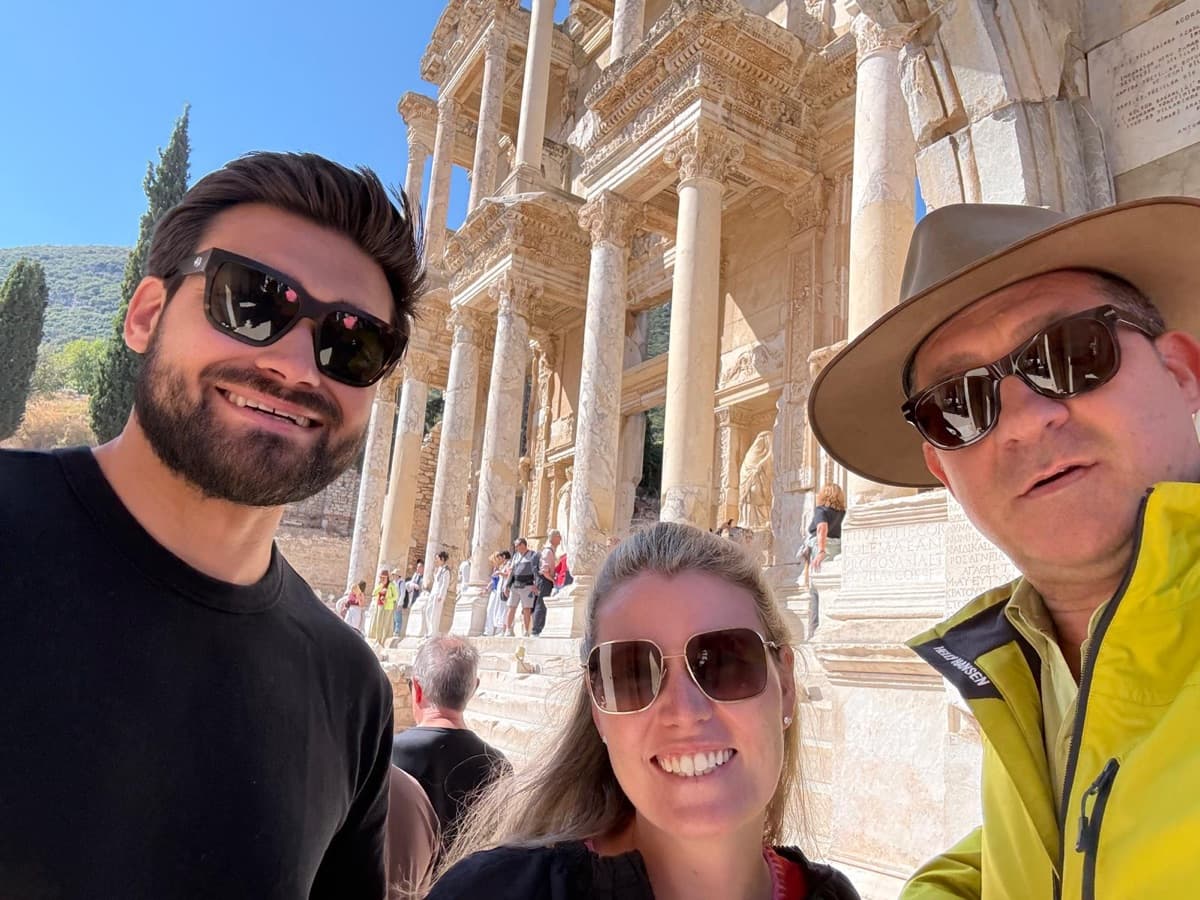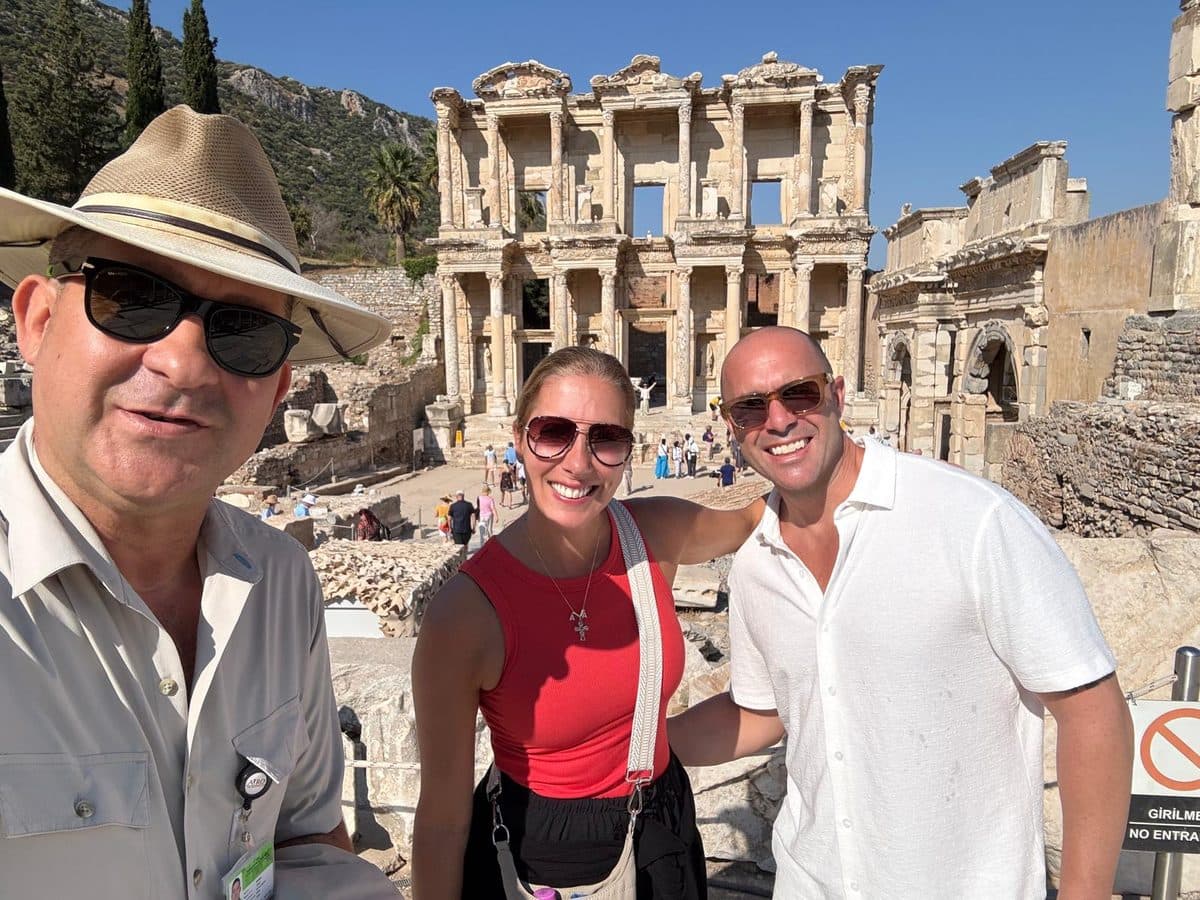
Ephesus is not a backdrop for photographs, though it produces the best ones on any cruise itinerary. It was a working capital: the Roman province of Asia was governed from here, a quarter of a million people lived here at the city's height, and the harbour that made it rich lay where dry fields now stretch toward the sea. When you walk down Curetes Street you are walking the main artery of one of the four or five greatest cities of the ancient Mediterranean, a UNESCO World Heritage site since 2015, and it starts twenty kilometres from your ship.
The walk, gate to gate
Every good Ephesus day is built on one decision: enter at the top. The site drapes down a valley between two hills, and the standard tourist entrance at the bottom means climbing in the heat and seeing the city in reverse. We start at the Upper Gate, and the city unfolds downhill the way its own citizens processed through it.
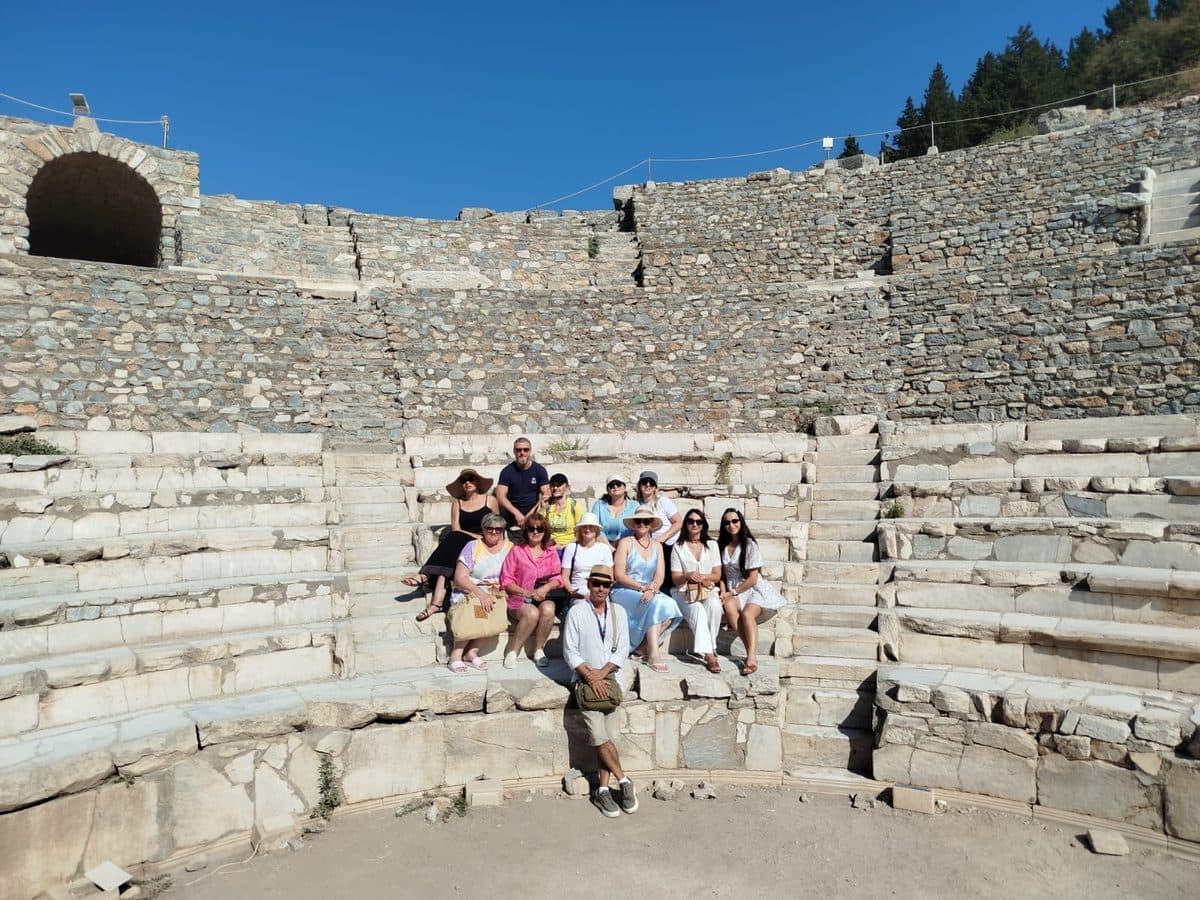
The first stretch belongs to government. The Odeon, a small covered theatre where the city council argued budgets and honours two thousand years before anyone said "municipality", sits above the long rectangle of the State Agora. Our guides like this corner precisely because it is unglamorous: this is where Ephesus was run, and standing in it makes the city real before the marble spectacle begins.
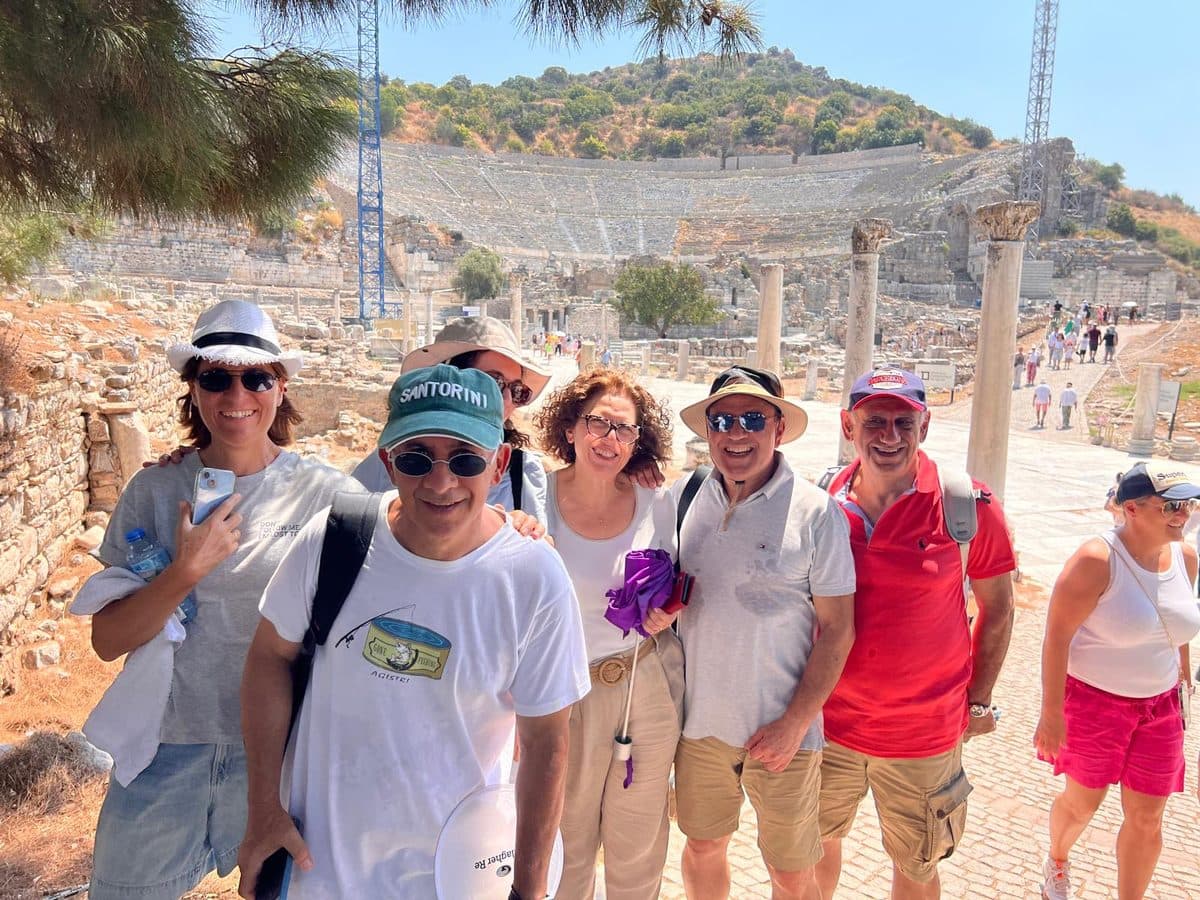
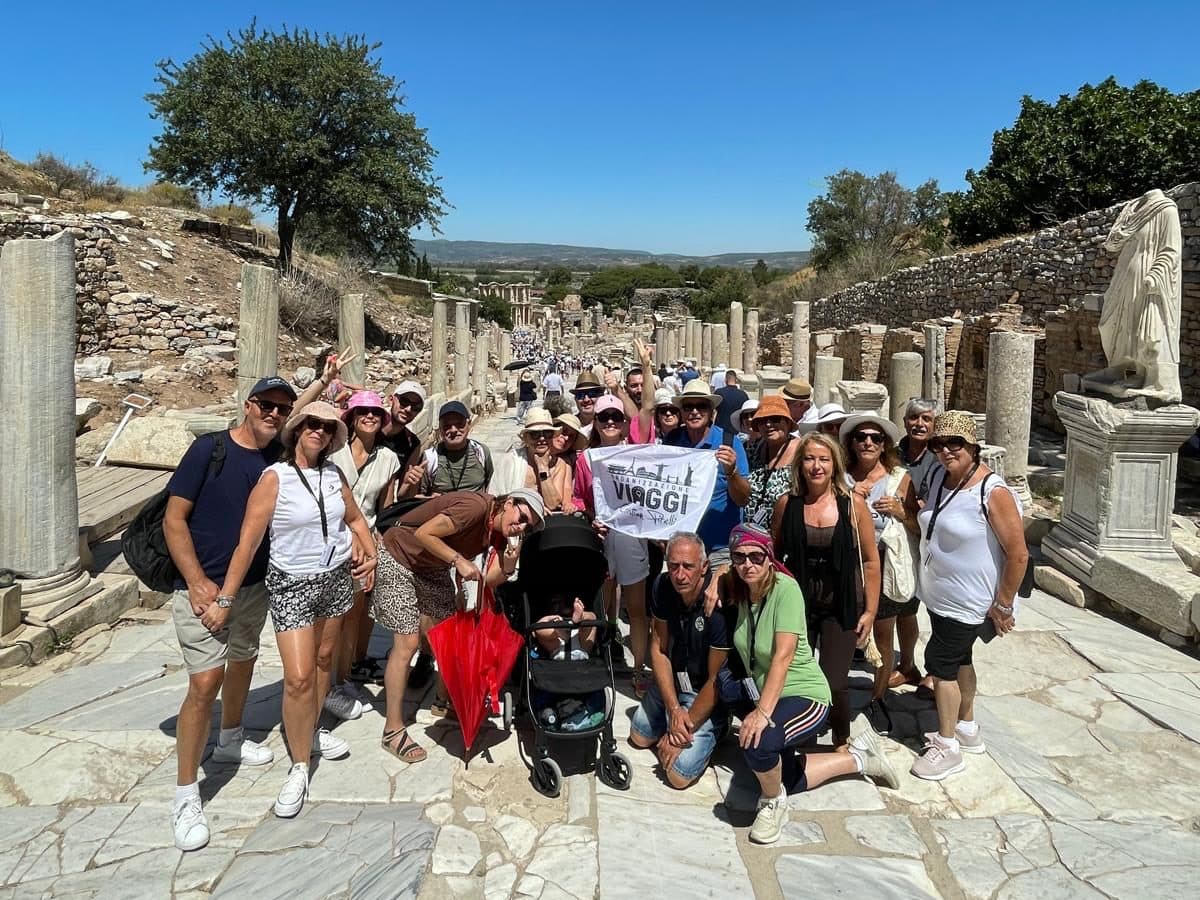
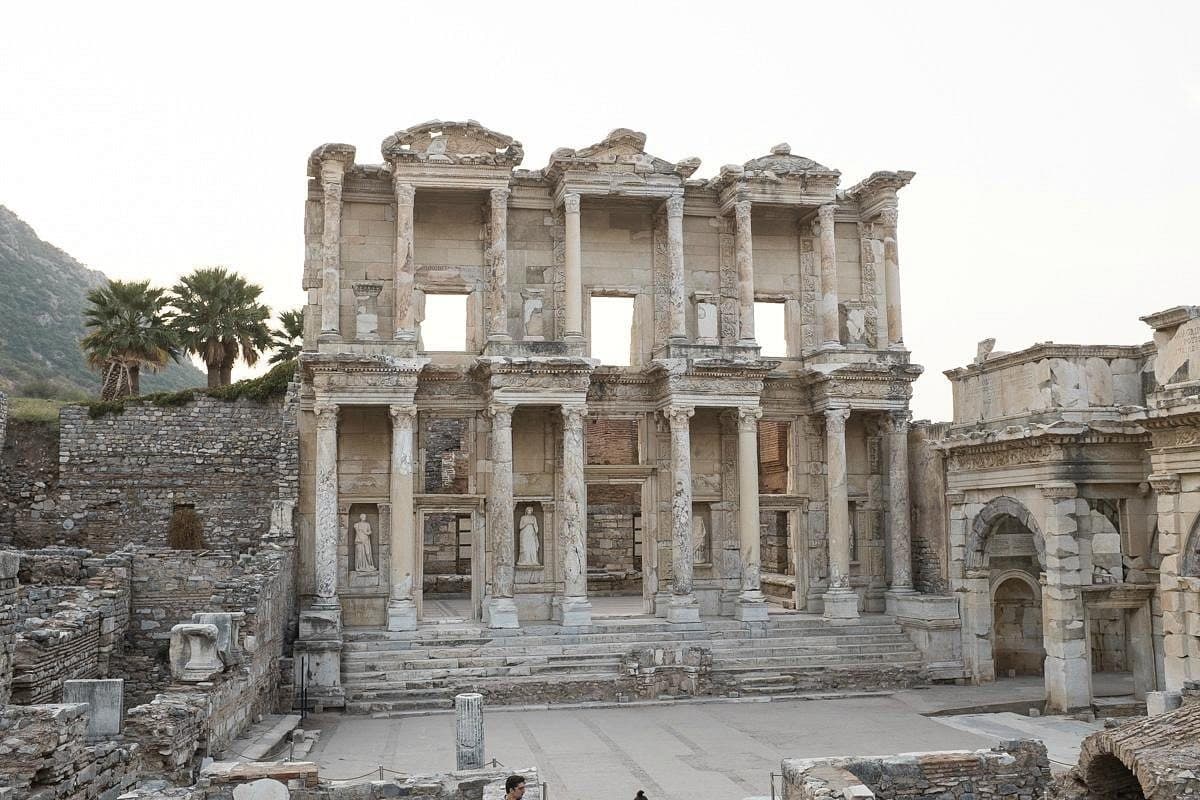
Then the street tips over. At the Hercules Gate, where the road narrows past two worn reliefs of the hero in his lion skin, Curetes Street drops away in front of you, and at the very bottom of the perspective, framed by columns the whole way down, stands the facade of the Library of Celsus. This is the moment guests go quiet. The walk down passes the Trajan Fountain, the Temple of Hadrian with its arched frieze, and door after marble door of what were once shops, baths and houses. The marble underfoot is original, polished by centuries of feet, grooved in places by cart wheels; comfortable shoes are not a suggestion.
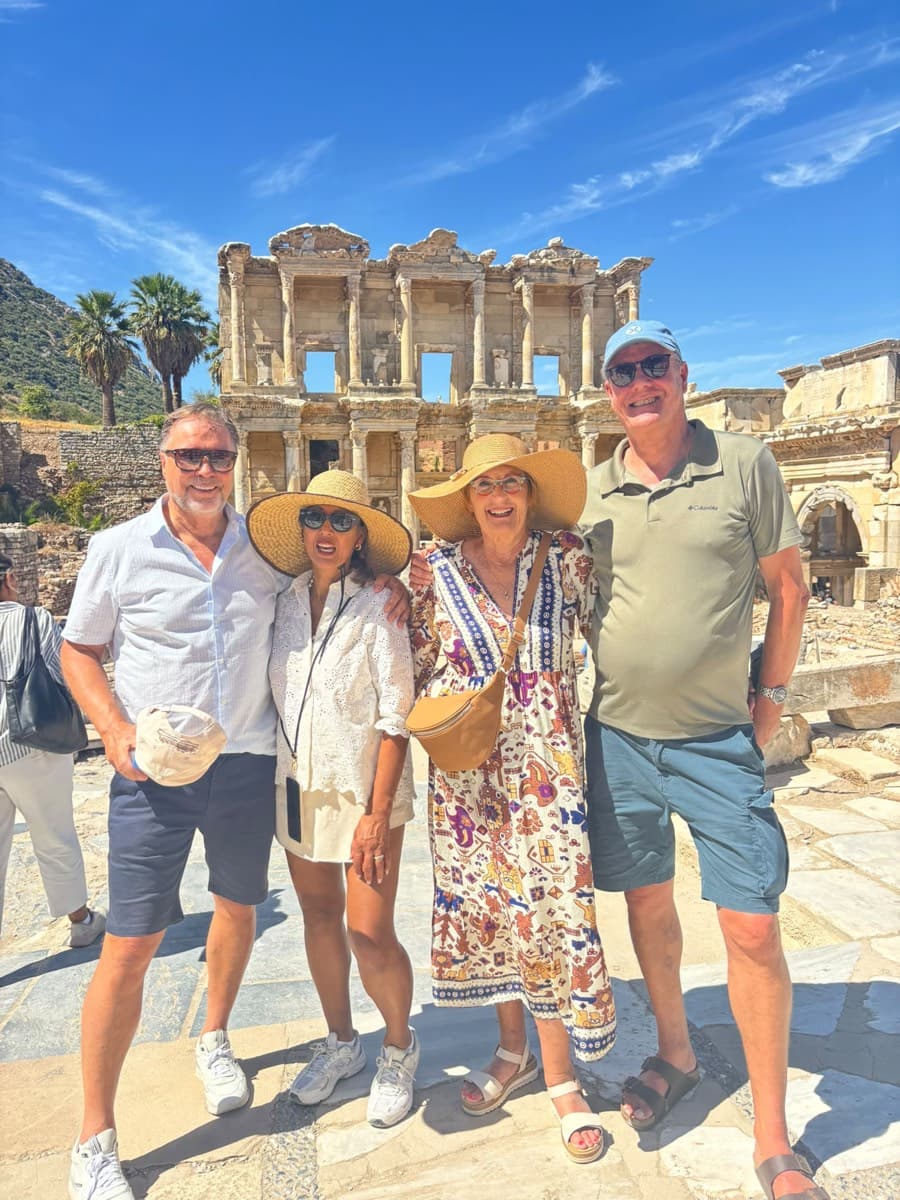
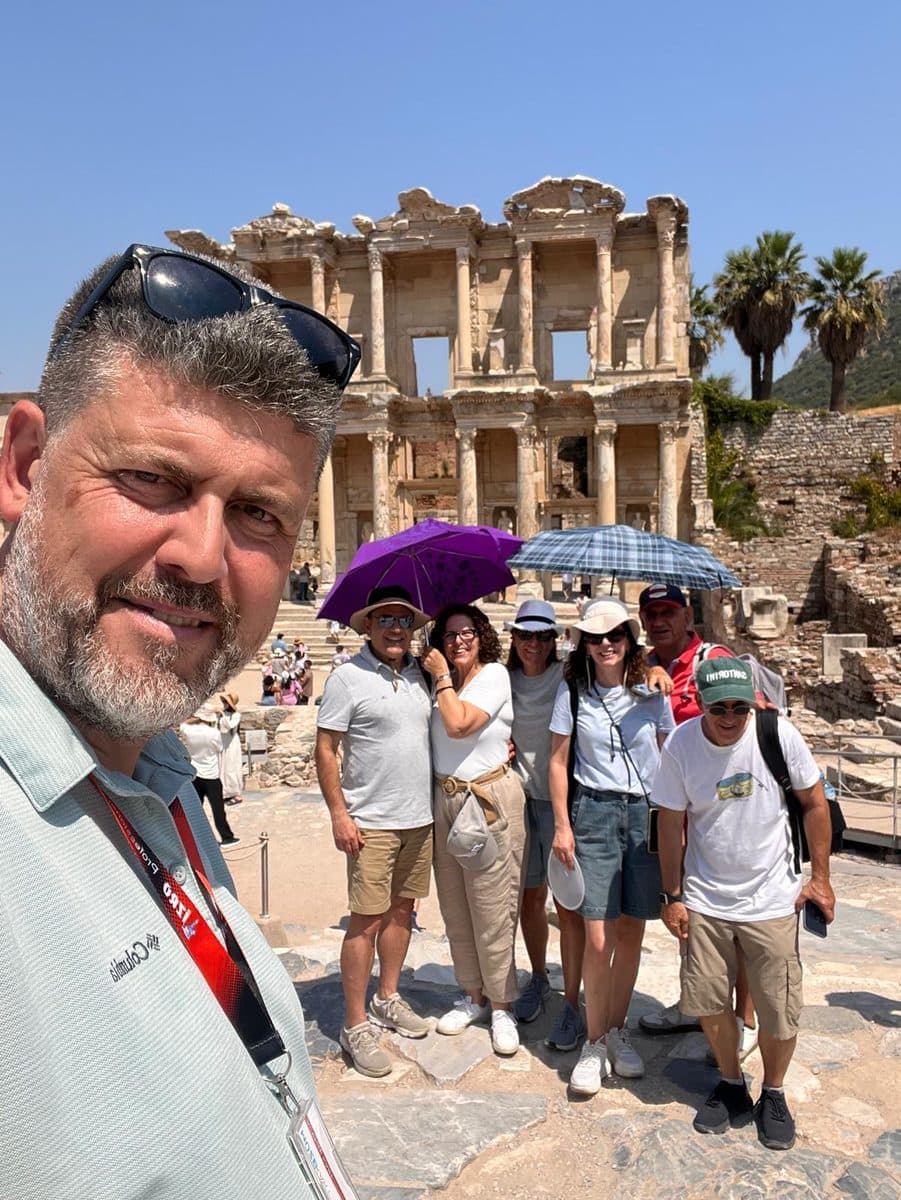
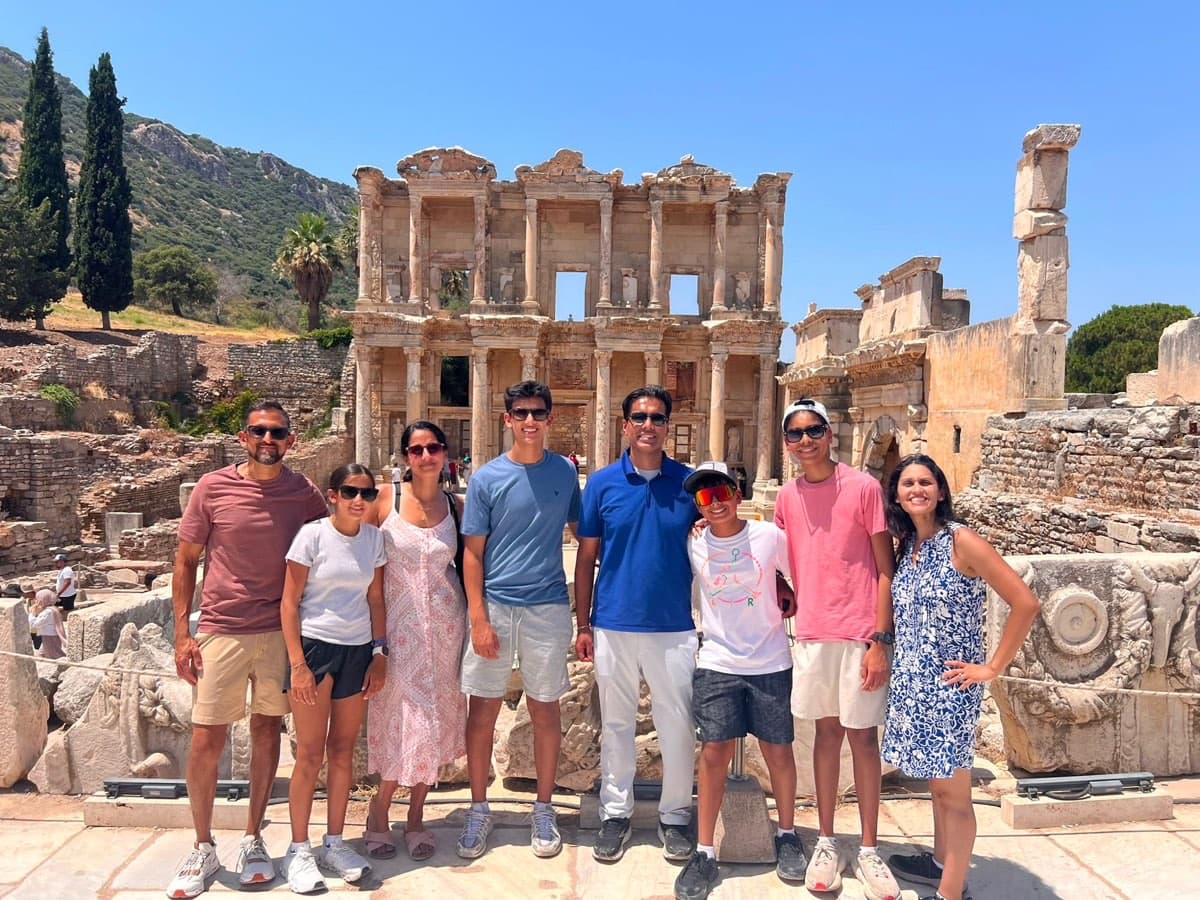
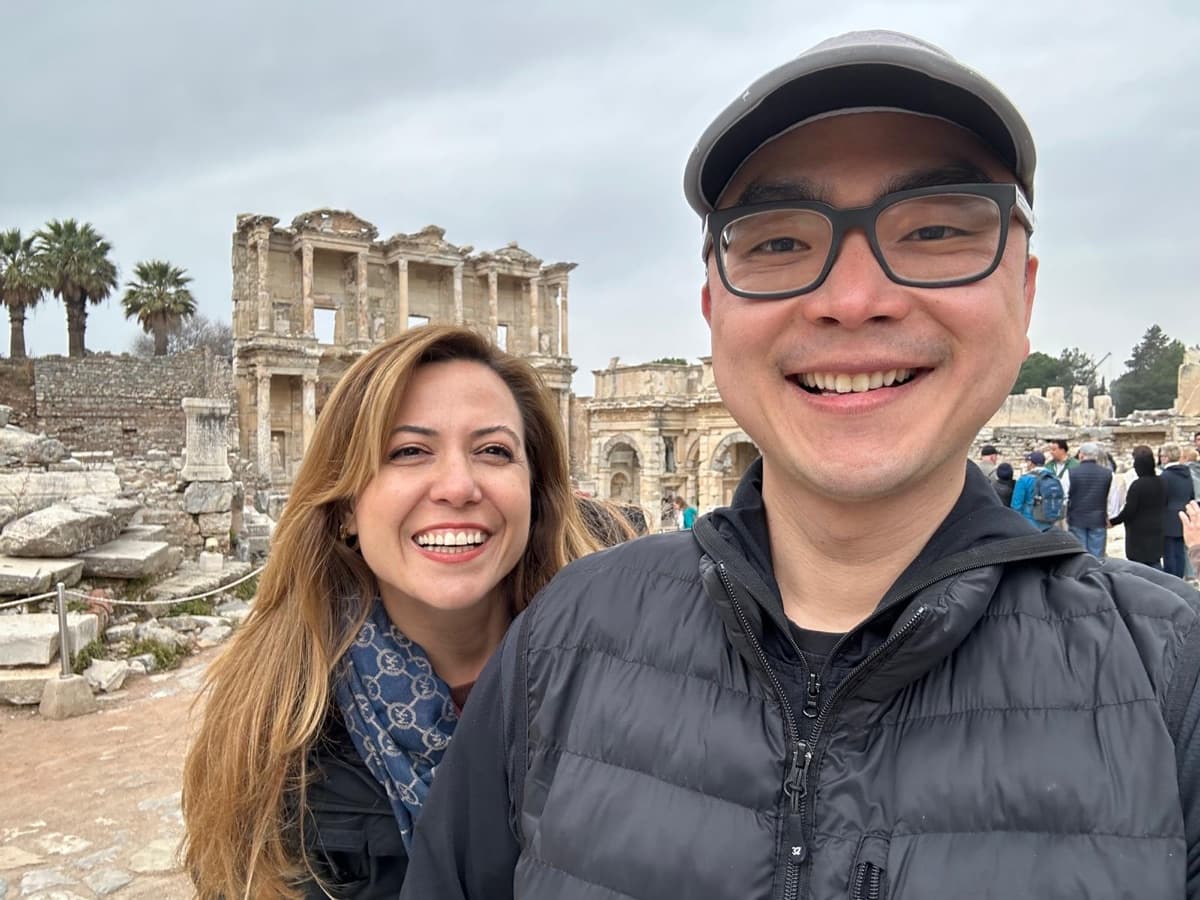
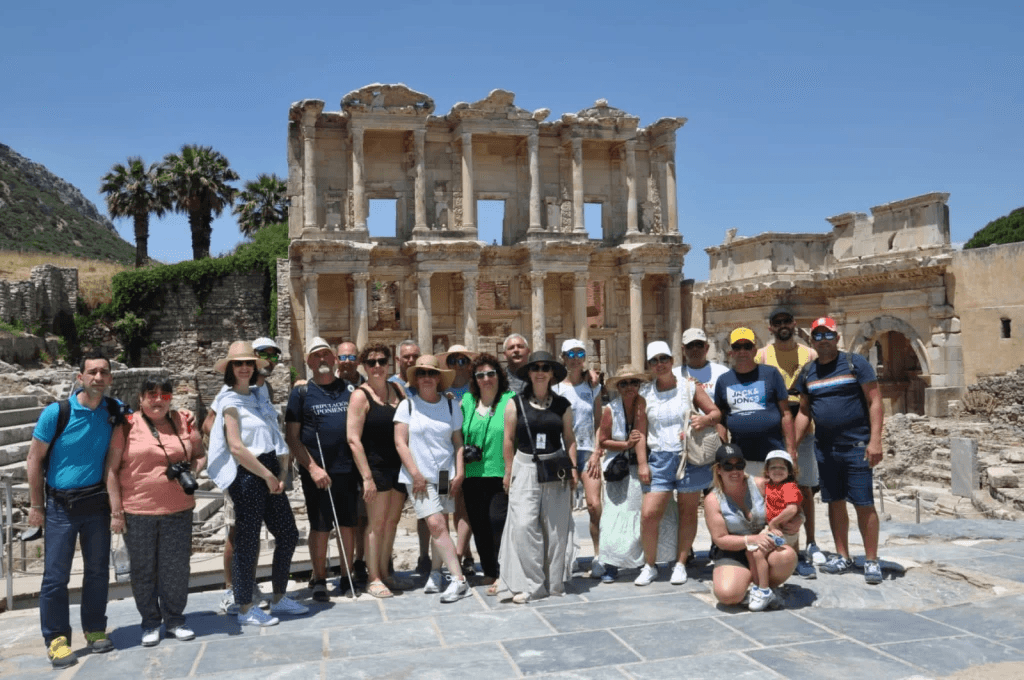
The street delivers you to the Library of Celsus, a two-storey facade built around 114 AD over the tomb of the man it honours, ruined by earthquake and re-erected stone by numbered stone in the 1970s. It has its own page on this site because it deserves one; stand on the plaza and let your guide explain how the facade deliberately deceives your eye. From the library, the Marble Street runs past the great agora to the Great Theatre, and Harbour Street carries you out to the Lower Gate, where your driver is already waiting. About 1.5 kilometres in all, effectively all of it downhill.
The hour that decides the day
Ephesus has two personalities. Before roughly half past nine in the morning it is a quiet marble city with birdsong; after that, on a busy port day, the coach fleet arrives and Curetes Street becomes a slow river of hats. The single most valuable thing a private tour buys is the gap between those two personalities. A private vehicle clears the port before the coaches finish loading, and twenty minutes later you are inside while the site is still waking. Our guides plan the whole route around that head start.
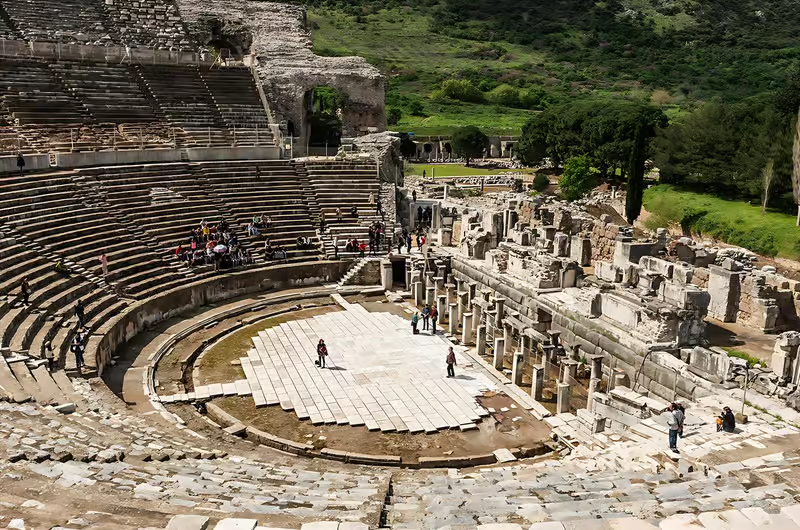
The film at the top of this page is our own photograph of the Great Theatre set gently in motion; the real thing at eight in the morning is quieter still.
What the coach tours skip
The Terrace Houses are the best hour in Ephesus and most itineraries omit them, because a separate ticket and a slower pace do not suit a forty-person schedule. Under a protective canopy on the slope beside Curetes Street, the excavated homes of the city's wealthy families keep their mosaics, their frescoed walls, their plumbing and their staircases, close enough to see brush strokes. If Ephesus is the public city, this is the private one, and it changes the way you read everything else. When your hours allow it, we add the ticket and take the hour.
The small human details reward the unhurried too. The public latrines, a marble bench of sociable holes that guests photograph more than some temples. The game boards scratched into paving stones by bored Romans. The inscription on the paving advertising the way to a certain house, which your guide will decode with a straight face. Ephesus is dense with the ordinary life of antiquity; a guide who knows where to point is the difference between a monument and a city.
The theatre and the riot
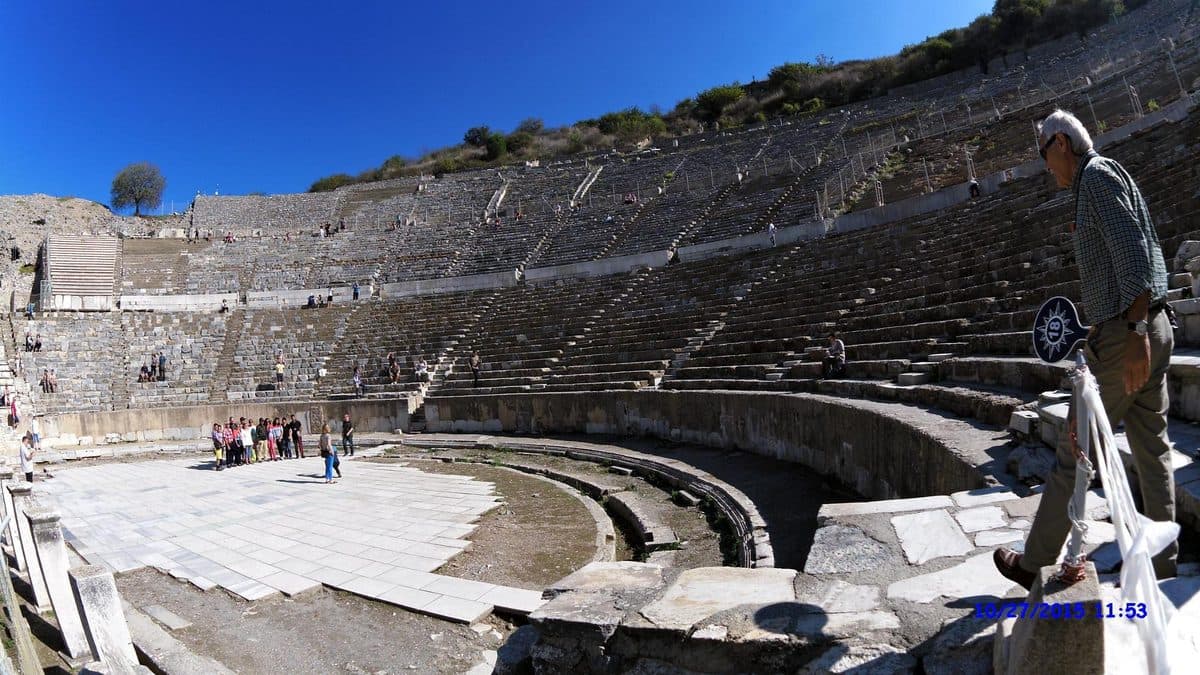
The Great Theatre held about twenty-four thousand people, and it earned its place in history for a single afternoon of noise. When Paul's preaching began to hurt the trade in silver shrines of Artemis, the silversmiths packed this theatre and chanted "Great is Artemis of the Ephesians" for two hours; the account in Acts 19 reads like the minutes of the world's first recorded trade protest. Standing on the stage floor and looking up the full sweep of stone seats, with the harbour road running away behind you, is the closest a cruise day comes to time travel. The theatre is the natural last act of the walk, a short stroll from the Lower Gate.
A city for every season
High summer needs choreography: an early start, the shaded side of the street, cold water in the vehicle and the Terrace Houses saved for the hottest hour, under their canopy. Spring is the guides' own favourite, wildflowers between the marble and storks nesting within sight of the ruins. Autumn stays warm underfoot long after the crowds thin, and a winter visit, on the days the ships still call, hands you the site almost alone, low gold light on the facade and every footstep audible. There is no wrong month; there are only different films of the same city.
Practical notes from the port
The drive from the Kuşadası berth is about twenty minutes. Entry is 40 euros for foreign visitors as of 2026, with the Terrace Houses on a separate ticket. The Ministry's 2027 fees are listed in Ephesus entrance fees 2027. On our private tours the tickets are bought before your ship docks and carried by your guide as QR codes, so there is nothing to settle at the window; what skip-the-line does and does not buy at this gate is set out in full. Bring sun protection and water in the warm months, a layer in the cool ones, and shoes with grip in all of them, the marble is beautiful and slick. Allow two to three hours on site at an honest pace, and if a stop deserves ten extra minutes, a private day is the only format that lets you take them.